


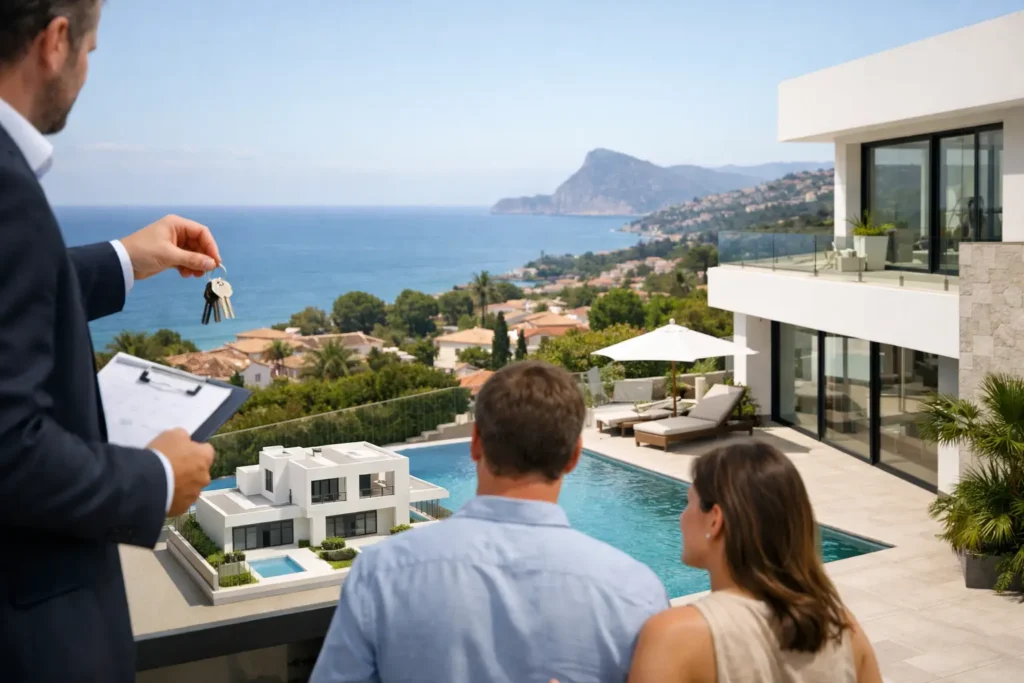
You can fall in love with a glossy show flat in ten minutes. What takes longer is understanding what you are actually buying, when it will be finished, and how well the development will suit your plans in Spain. A proper guide to buying new build Spain should do more than admire the pool and sea views – it should help you ask the right questions before you commit.
For many British and international buyers, a new build is appealing for obvious reasons. You get modern layouts, energy-efficient systems, lower maintenance in the early years and, in many cases, the chance to choose finishes or secure a property before prices rise. But buying a home that is newly completed, or still under construction, is not the same as buying a resale property. The process, the paperwork and the risks are different.
Why buyers choose a new build in Spain
New developments tend to attract several types of buyer at once. Some want a lock-up-and-leave holiday home with communal gardens, a gym and predictable running costs. Others are relocating and prefer something modern, accessible and easy to maintain. Investors often look at off-plan opportunities because earlier launch prices can be more attractive than values closer to completion.
That said, newer does not always mean better for every buyer. A stylish development may look ideal online but feel too seasonal in winter. A generous terrace may matter more to you than a bigger interior. If rental income is part of the plan, you also need to think beyond the brochure and assess demand, local competition and community rules.
Guide to buying new build Spain – start with the developer
The first thing to check is not the kitchen finish or the pool design. It is the developer. A strong developer with a solid track record, reliable construction partners and clear after-sales support can make the entire experience far smoother.
Ask what else they have built and whether previous projects were delivered broadly on time. Delays can happen in Spain, just as they can anywhere, but there is a difference between a realistic extension and poor project management. You will also want to know whether the development has the correct planning permissions and whether the funds you pay are protected, as they should be under Spanish law for off-plan purchases.
This is where experienced local guidance matters. On paper, two developments can look similar. In practice, one developer may have an excellent reputation for build quality and communication, while another may be known for slow snagging responses or overpromising on completion dates.
Understand what stage you are buying at
Not all new builds are the same. You may be buying off-plan before construction is finished, during the build itself, or once the property is key-ready. Each option comes with a different balance of price, certainty and waiting time.
Off-plan often gives you the best choice of units and potentially the best entry price. It can also mean a payment schedule spread over the build period rather than paying the full amount at once. The trade-off is patience. Completion dates are estimates, not guarantees, and you are buying partly on plans and specifications rather than a finished home.
A completed new build removes much of that uncertainty. You can walk the exact property, assess the views properly and move ahead more quickly. The downside is that prime units may already have gone, and prices can be higher than they were at launch.
The reservation stage and what it means
Once you have found the right property, the usual first step is signing a reservation agreement and paying a reservation fee. This takes the property off the market for a set period while your solicitor checks the legal documents.
Do not treat this as a casual holding deposit. Read the terms carefully. You need to know under what circumstances the fee is refundable and what happens if legal issues arise. A good independent solicitor will review the development paperwork, the developer details and the contract before you move on to the private purchase contract.
If you are financing the purchase, this is also the point to speak seriously with a mortgage broker or lender. Getting an early sense of what a Spanish bank will lend, and on what terms, helps avoid surprises later.
Legal checks matter more than the sales suite
Spanish new build purchases come with a set of documents that should be reviewed properly. These include planning permission, building licence, the developer’s legal ownership of the land, bank guarantees or insurance for stage payments, and the specification that sets out what you are actually buying.
That specification deserves close attention. It should detail materials, appliances, communal elements and any extras that are included. Buyers are sometimes disappointed not because the developer broke the rules, but because they assumed more than the paperwork promised.
Your solicitor should also confirm the expected completion documents, including the licence of first occupation or equivalent where applicable. Without proper legal review, a modern new build can still become a stressful purchase.
Budget for more than the purchase price
One of the most common mistakes in any guide to buying new build Spain is focusing only on the headline price. You need to budget for the wider cost of purchase. In Andalusia, that will usually include VAT on new properties, stamp duty, legal fees, notary fees, land registry costs and, if relevant, mortgage-related costs.
You should also think about practical extras that are often not included in the advertised price. Parking and storage may be optional. So might upgraded flooring, underfloor heating, better kitchen packages or bespoke interior finishes. Then there is furnishing, window dressings and setting up utilities, which can add up quickly if you want the property ready to use straight away.
Service charges are worth checking too. A development with extensive communal facilities may be attractive, but those features have to be maintained. For some buyers, that is good value. For others, especially if they will only use the property a few weeks each year, it may feel expensive.
Location still decides the long-term value
With new developments, buyers can be so focused on the building itself that they forget to judge the area properly. A smart flat in the wrong location is still the wrong property.
Think about how you will actually use it. If you want easy holidays, proximity to the airport, beaches, restaurants and year-round amenities may matter more than a larger terrace inland. If you are retiring, access to healthcare, walkability and winter atmosphere become more important. If rental income is part of the strategy, look closely at the appeal of the location across different seasons.
On the western Costa del Sol, for example, buyers often compare newer developments in places such as Estepona, Casares, Manilva and La Duquesa not just on finish and price, but on lifestyle. Some areas feel more established and lively year round, while others offer better value and more space. There is no universal right answer. It depends on whether your priority is convenience, rental demand, sea views, golf access or long-term growth.
Completion, snagging and handover
When the property is ready, completion takes place before a notary and the remaining balance is paid. Before that happens, you should inspect the property carefully. New does not mean perfect.
Snagging is normal. Minor issues such as paint finishes, alignment, seals, doors or fittings are common even in good developments. What matters is how those issues are recorded and how efficiently they are resolved after handover. Some developers are excellent at after-sales care. Others need chasing. That is another reason local support is valuable, especially if you are not in Spain full time.
You should also be clear on warranties, owners’ community rules and what is needed if you plan to rent the property out. A home can be ideal for private use but less suitable for short-term letting depending on local regulations and community restrictions.
A practical way to buy with confidence
The safest approach is simple. Choose the area carefully, check the developer thoroughly, use an independent solicitor, understand every payment stage and budget beyond the asking price. Then look at the property not just as a brochure image, but as a place you will actually own, maintain and use.
At Omni Real Estate, we often find that buyers make better decisions when they narrow the search by lifestyle first and property second. That small shift can save a lot of time and avoid expensive compromises.
A new build in Spain can be an excellent purchase, whether you want a holiday base, a permanent move or a long-term investment. The key is not rushing because the marketing feels polished. Ask better questions, and the right property usually becomes much easier to spot.