


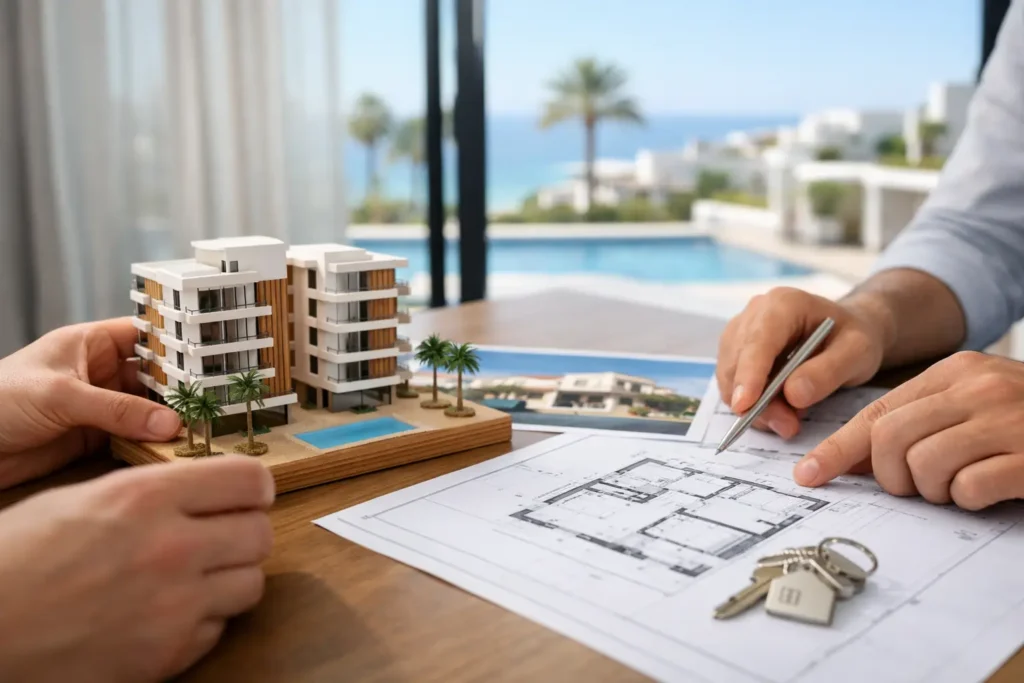
Buying off-plan can feel exciting right up until the moment you are asked to reserve a property that only exists on a brochure, a floorplan and a promise. That is usually the point when buyers start asking the right question – how to buy off plan in Spain without taking unnecessary risks. The good news is that off-plan purchases can work very well, provided you understand the process, the paperwork and the developer behind it.
For many buyers, the appeal is obvious. You may secure a brand-new property at an earlier price point, spread payments over the build period and choose a home with modern layouts, energy efficiency and strong rental or resale appeal. On parts of the Costa del Sol, off-plan homes can also open up developments and price bands that simply are not available on the resale market. But there are trade-offs. You are buying ahead of completion, timescales can move, and the quality of the end product depends heavily on the developer and the specification agreed in writing.
How to buy off plan in Spain step by step
The first step is not choosing a kitchen finish or deciding which block has the best sea view. It is working out what you want the property to do for you. A holiday home, a full-time move and an investment purchase each call for slightly different decisions on location, layout, running costs and future demand. A stylish top-floor flat may be perfect for lettings, but less practical for retirement if the development is steep or car-dependent.
Once your brief is clear, the next job is to assess the development itself. Not all off-plan projects are equal. Look at the developer’s track record, previous completed schemes and the clarity of the building specification. If a brochure is vague, that is usually a warning sign. Buyers should want to see plans, a specification list, payment schedule, expected completion date and details of what is included as standard.
This is also the stage where local advice really matters. A development may look attractive online, but the surrounding area can make all the difference. On the western Costa del Sol, for example, one scheme may suit golfers and second-home buyers, while another is stronger for year-round living because it is closer to shops, beaches and established services. The right choice is rarely just about the property itself.
Check the developer and the legal paperwork
Before paying a reservation fee, your independent solicitor should review the legal position of the development. Independent is the key word here. The solicitor should be acting for you, not for the developer.
A proper legal check normally includes confirming that the developer owns the land, that planning permission and building licences are in place, and that the property can be legally built and sold as described. Your solicitor should also review the contract terms, stage payment structure, completion conditions and any clauses relating to delays or changes.
One of the most important protections when learning how to buy off plan in Spain is the bank guarantee or insurance policy covering stage payments. In simple terms, money paid during construction should be protected in line with Spanish law. If the development is not completed under the agreed legal conditions, this protection is what helps buyers recover funds. It is not a detail to skim over. It is one of the main safeguards in the entire process.
Reservation, private contract and stage payments
Most off-plan purchases begin with a reservation agreement and a reservation fee. This takes the unit off the market for a set period while legal checks are carried out. The amount varies by developer, and the conditions matter. You need to know whether the fee is refundable, under what circumstances, and what happens if your solicitor raises a legal issue.
After that comes the private purchase contract. This is the main agreement between buyer and developer. It sets out the property details, price, payment schedule, estimated completion date and what happens at handover. It should also describe the specifications clearly enough that there is less room for dispute later.
Stage payments are then made during construction. Some developers require a deposit on signing the private contract followed by scheduled payments linked to build milestones. Others use a simpler structure. Either way, never transfer funds casually or outside the agreed legal framework. Payments should go to the correct account, and each one should be properly documented.
Be realistic about build times and snagging
Completion dates in off-plan contracts are often estimated rather than fixed to the exact day. Delays can happen for understandable reasons, including supply issues, administration or utility connections. That does not automatically mean there is a problem, but buyers should understand from the outset that timing may shift.
What matters is how the contract deals with delays and what rights you have if a project overruns significantly. This is another reason not to rely on verbal assurances from a sales office. If something matters to you, it needs to be in writing.
When the property is ready, there is usually a period for inspection and snagging. Snagging means identifying defects or unfinished items before or shortly after completion. Even in high-quality developments, minor issues are common. The key is to document them properly and make sure there is a clear route for remedial works.
Costs buyers sometimes overlook
The purchase price is only part of the picture. Buyers also need to budget for taxes, legal fees, notary fees, Land Registry fees and mortgage-related costs if finance is involved. For new-build and off-plan property in Spain, taxes are different from a resale purchase, so your solicitor should explain the figures based on the region and property type.
There may also be practical extras that affect the real cost of ownership. Parking spaces, storage rooms, furniture packs, upgraded finishes and community fees can all shift the overall budget. A development that looks competitive at headline price may be less attractive once these are added in.
This is especially relevant for buyers comparing schemes in places such as Estepona, Casares or Duquesa, where the lifestyle offering can vary quite a bit. A lower purchase price further inland may come with higher dependence on a car, while a slightly more expensive coastal development might prove stronger for lettings and easier for everyday living. Value is not always the same as the cheapest option.
Mortgage finance for off-plan property
Some buyers assume they can sort the mortgage near the end of the build. Sometimes that is possible, but it is not a strategy to leave unchecked. Lending criteria can change, and the final mortgage offer will depend on your circumstances at the time of completion.
If you will need finance, take advice early and understand what level of borrowing is realistic. Non-resident buyers are often approved for a lower percentage than they expect. You should also consider exchange rate risk if your income or savings are in sterling and the property is priced in euros. A favourable rate at reservation does not guarantee the same position a year later.
What makes a good off-plan purchase
A good off-plan purchase usually combines three things: a reliable developer, a well-chosen location and a property type with lasting appeal. That might mean a two-bedroom flat in a well-run coastal development with walking access to amenities, or it might mean a villa in an area with very limited new supply. The right answer depends on your goal.
For investment-minded buyers, future rental demand, service charges and resale competition matter just as much as the launch price. For lifestyle buyers, orientation, privacy, outside space and ease of access may matter more. There is no single formula, which is why honest advice is so valuable. Sometimes the right guidance is not pushing the newest launch, but pointing out when a resale property would serve you better.
Buyers who do best with off-plan tend to be the ones who stay disciplined. They ask awkward questions, read contracts carefully and resist glossy marketing when the fundamentals do not stack up. They understand that buying new can be an excellent route into the Spanish market, but only when the legal and practical details are handled properly.
For anyone considering an off-plan purchase on the Costa del Sol, a calm and well-supported process makes all the difference. That is where a local agency with hands-on experience can help, not just by finding suitable developments, but by helping you weigh up area, build quality, long-term value and whether the property genuinely fits your plans. A good off-plan decision should still feel like a good one long after the brochure is put away.