



Estepona is defined by a rare combination of authentic Andalusian character, modern infrastructure, and a genuinely welcoming expat community that few towns on Spain’s Costa del Sol can match. What makes Estepona a desirable expat location is not any single factor but the way climate, culture, cost, and community reinforce one another. With 20 to 25% of its population made up of expats within a total of around 73,457 residents, the town offers diversity without losing its Spanish soul. For anyone seriously considering relocating to the western Costa del Sol, Estepona deserves close attention.
What lifestyle benefits does Estepona offer expats?
Estepona’s Mediterranean climate is the starting point for most conversations about the town’s appeal. Mild winters, low humidity, and over 300 days of sunshine per year create conditions where outdoor living is not a seasonal luxury but a daily reality. You eat outside in January. You walk the promenade in February. That consistency shapes everything from your social life to your mental wellbeing.
The old town is one of the most visually striking on the entire Costa del Sol. The Ayuntamiento has invested heavily in beautification, lining streets with flower pots, commissioning murals on whitewashed walls, and creating the celebrated orchid house. The result is a town centre that genuinely rewards walking, which is unusual for a coastal resort of this size.
Food culture is another pillar of the Estepona lifestyle for expats. The port area offers fresh seafood at prices that would be unthinkable in comparable UK coastal towns. The old town’s tapas bars serve a daily menu (menú del día) for around €10 to €12, including wine. This is not tourist pricing. These are the restaurants where local Spanish families eat on a Tuesday lunchtime.

The expat community itself is a significant draw. Engaging with local culture is consistently cited as one of Estepona’s strongest appeals, beyond climate and amenities alone. Unlike some Costa del Sol towns where expat and Spanish communities exist in parallel, Estepona’s scale encourages genuine integration.
Key lifestyle advantages at a glance:
- Quieter and less touristy than Fuengirola and Torremolinos, with fewer high-rise developments
- A thriving Saturday market and weekly farmers’ market for fresh local produce
- Golf courses, hiking trails in the Sierra Bermeja, and watersports at the marina
- Strong sense of community among both Spanish residents and the international population
- Council investment in cleanliness and maintenance that is visibly reflected in local services
Pro Tip: If you are visiting to assess whether Estepona suits you, come in November or March rather than August. The town’s authentic character is far more apparent outside peak season, and you will get a realistic picture of daily life.
How does the property market shape expat choices in Estepona?
Estepona’s property market offers genuine variety, from studio apartments in the old town to luxury villas on the New Golden Mile. Understanding the neighbourhoods is the first step to finding the right fit. The Estepona property market has distinct zones, each with its own character and price point.
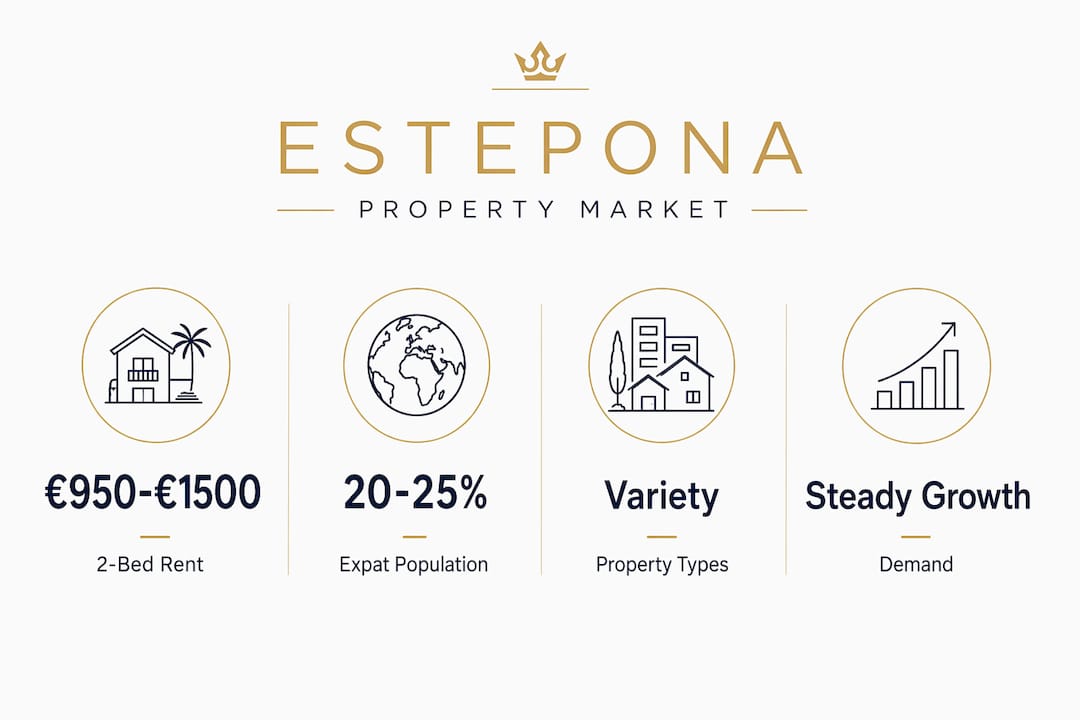
Two-bedroom rental prices vary considerably depending on location:
| Neighbourhood | Monthly rent (2-bed) | Character |
|---|---|---|
| Old Town | €1,000 to €1,300 | Walkable, characterful, limited parking |
| Port area | €1,100 to €1,500 | Modern, lively, close to amenities |
| Cancelada / New Golden Mile | €950 to €1,300 | Family-friendly, quieter, near beach |
| El Paraíso / Benahavís side | €900 to €1,250 | Greener, more rural feel, golf nearby |
| Outskirts | €750 to €1,050 | Most affordable, car dependent |
One challenge worth knowing before you arrive: the rental market is tightening because landlords increasingly favour short-term holiday lets over long-term contracts. This reduces available stock for residents. Many properties are filled through local networks before they ever appear on Idealista or Fotocasa. Starting your search six to eight weeks before your intended move date is the minimum, and tapping into local Facebook groups and expat networks often yields better results than portals alone.
For buyers, the picture is more positive. Demand for property in Estepona has grown steadily, and new developments continue to attract both owner-occupiers and investors. The town’s relative affordability compared to Marbella, combined with its improving infrastructure, makes it a credible long-term investment.
Pro Tip: Hire a local gestor before you sign anything. A gestor is a licensed administrative professional who handles paperwork, tax filings, and residency applications on your behalf. For expats unfamiliar with Spanish bureaucracy, this is money very well spent.
What practical matters should expats prepare for in Estepona?
Transport is the most common practical adjustment for new arrivals. Estepona has no direct train connection. The nearest commuter rail line ends at Fuengirola, 45 minutes to the east. This means a car is not optional for most residents. Budget between €200 and €350 per month for car-related costs including insurance, fuel, and maintenance. The AP-7 motorway, which became toll-free in 2020, provides good access to Marbella (around 20 minutes), Málaga Airport (around 55 minutes), and Gibraltar (around 45 minutes). Car dependency is a reality for Estepona residents, but the motorway access genuinely softens the impact.
Healthcare is the second major consideration. The Spanish public system covers residents who register correctly, but the process has specific steps:
- Obtain your NIE (Número de Identificación de Extranjero), which is your Spanish tax identification number
- Complete empadronamiento, which means registering with the local town hall. This registration is the gateway to accessing public services including healthcare
- Register with a local public health centre (centro de salud) once empadronamiento is confirmed
- Note that public GP wait times can run to two to three weeks for non-urgent appointments
Most expats supplement public care with private health insurance, which costs between €60 and €150 per month depending on age and coverage. Private insurers typically have agreements with Quirónsalud Estepona and Hospital HC Estepona, both of which have English-speaking staff. For specialist access and shorter waiting times, private cover is the practical choice. Hiring a gestor to manage residency paperwork, tax filings, and healthcare registration removes the most stressful elements of the administrative process.
How does Estepona compare with other Costa del Sol towns?
Choosing between Estepona, Marbella, Fuengirola, and Torremolinos comes down to what you prioritise. Each town has a distinct character and a different cost profile.
| Feature | Estepona | Marbella | Fuengirola | Torremolinos |
|---|---|---|---|---|
| Atmosphere | Authentic, quieter | Glamorous, busy | Lively, expat-heavy | Tourist-oriented |
| Average 2-bed rent | €950 to €1,500 | €1,200 to €2,000+ | €900 to €1,400 | €800 to €1,300 |
| Train access | None | None | Yes (Cercanías) | Yes (Cercanías) |
| Expat community | 20 to 25% of population | Large but fragmented | Very large | Large, seasonal |
| Spanish character | High | Moderate | Low to moderate | Low |
| Airport distance | 55 minutes | 45 minutes | 30 minutes | 15 minutes |
Fuengirola and Torremolinos have the advantage of direct rail links to Málaga Airport, which matters if you travel frequently. Marbella offers more high-end dining and nightlife but at a noticeably higher cost of living. Estepona sits in a position that many expats find ideal: more affordable than Marbella, more authentically Spanish than Fuengirola, and less developed than Torremolinos. The best areas on the Costa del Sol each have their merits, but Estepona’s combination of price, character, and community is genuinely difficult to replicate elsewhere on the coast.
Key takeaways
Estepona’s appeal as an expat destination rests on its rare balance of authentic Spanish culture, affordable property, quality healthcare access, and a well-maintained town that the local council actively invests in.
| Point | Details |
|---|---|
| Community and culture | Around 20 to 25% of residents are expats, creating diversity without eroding Spanish character. |
| Property variety | Rental prices range from €750 to €1,500 for two-bedroom apartments depending on neighbourhood. |
| Transport reality | No train connection means a car is necessary; budget €200 to €350 per month for vehicle costs. |
| Healthcare access | Register via empadronamiento first; most expats add private insurance for specialist access. |
| Comparative advantage | More affordable than Marbella and more authentically Spanish than Fuengirola or Torremolinos. |
What I have learned from watching expats settle in Estepona
After years of working with buyers and renters across the western Costa del Sol, I have noticed a consistent pattern. The expats who thrive in Estepona are not the ones who arrive looking for a replica of home with better weather. They are the ones who lean into what the town actually offers: a slower pace, a genuine Spanish neighbourhood feel, and a community that rewards effort.
The old town is not just pretty. It is functional. People shop there, eat there, and socialise there year-round. That matters more than most people realise when they are choosing where to live. A town that empties in October is a very different experience from one that stays alive.
My honest observation is that Estepona is at an interesting point in its development. It is still affordable relative to Marbella, but that gap is narrowing. The 2026 property market trends suggest continued demand growth, particularly from northern European buyers who want quality of life without Marbella prices. If you are considering a move, the window for getting in at current values is not indefinitely open.
The food, the light, the pace of life. These are not marketing phrases. They are the things people mention when you ask them, two years in, whether they made the right decision. Almost universally, they say yes.
— Nina
Find your Estepona home with Omnirealestate
Omnirealestate has spent over a decade working exclusively on the western Costa del Sol, with deep knowledge of Estepona’s neighbourhoods, price movements, and the practical realities of buying as an expat. Whether you are looking for a lock-up-and-leave apartment near the port or a villa with sea views on the New Golden Mile, the team holds access to over 7,500 listings across the region. Browse current Estepona homes for sale or use the full property search platform to filter by budget, location, and property type. Every enquiry receives a personal response from a team that actually lives and works in the area.
FAQ
What percentage of Estepona’s population are expats?
Expats make up approximately 20 to 25% of Estepona’s population of around 73,457 residents. This creates a supportive international community while the town retains its predominantly Spanish character.
Do I need a car to live in Estepona?
Yes. Estepona has no direct train connection, and the nearest commuter rail line ends at Fuengirola. Most residents budget €200 to €350 per month for car-related costs, though the toll-free AP-7 motorway makes regional travel straightforward.
How does healthcare work for expats in Estepona?
You must first complete empadronamiento (town hall registration) and obtain an NIE before accessing public healthcare. Most expats also take out private insurance costing €60 to €150 per month to access English-speaking specialists at hospitals such as Quirónsalud Estepona.
Is Estepona more affordable than Marbella?
Yes. Two-bedroom rentals in Estepona typically range from €950 to €1,500 per month, compared to €1,200 to over €2,000 in Marbella. Property purchase prices follow a similar pattern, making Estepona a credible alternative for buyers who want Costa del Sol quality at a lower entry point.
What is a gestor and do expats in Estepona need one?
A gestor is a licensed Spanish administrative professional who handles bureaucratic tasks including residency applications, tax filings, and legal paperwork. Hiring a gestor is strongly recommended for expats, as Spanish administrative processes are complex and language barriers can cause costly delays.