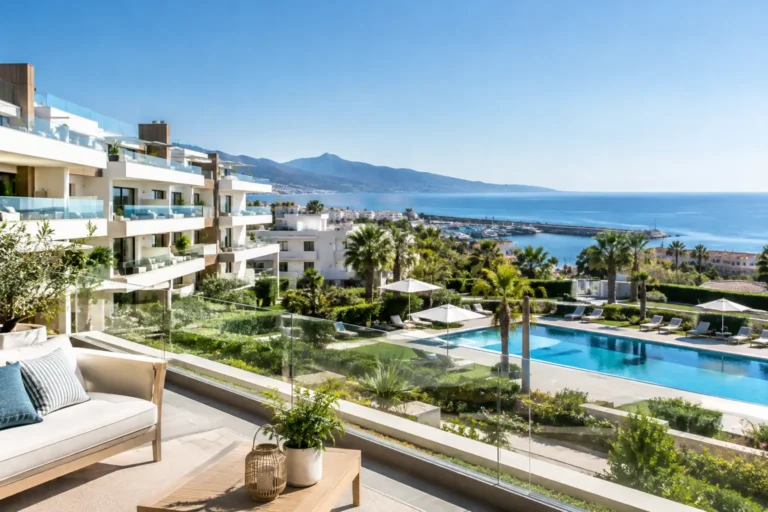

Spain’s luxury real estate market is defined by six core property types: villas, apartments, penthouses, beachfront homes, rural fincas, and new developments. Each category carries its own price range, lifestyle profile, and investment logic. Entry points start at around €400,000 for apartments and climb past €24 million for ultra-prime villas in enclaves like La Zagaleta and La Loma de Cortesin. Whether you are buying a second home on the Costa del Sol or building a portfolio of high-end properties in Spain, understanding what separates these categories is the single most important step before you commit.
1. What defines luxury villas in Spain?
Luxury villas are detached homes with private gardens, pools, and full independence from shared infrastructure. They represent the most aspirational segment of the Spanish market and account for the widest price spread of any property type.
Key features buyers expect at this level include:
- Private infinity or lap pools with outdoor entertaining terraces
- Smart-home automation covering lighting, climate, and security
- Landscaped gardens, often with mature olive or citrus trees
- Gated plots ranging from 1,000 to 10,000 square metres
- High-end finishes: marble flooring, bespoke kitchens, and floor-to-ceiling glazing
Popular locations include the Costa del Sol, Mallorca, and the exclusive gated community of La Zagaleta near Benahavís. Prices range from €1.5 million to well over €24 million for ultra-prime stock. The Balearic Islands alone hold 23% of Spain’s luxury listings, with Mallorca dominating that share. This concentration signals both strong demand and constrained supply, which supports long-term capital appreciation.
Villas suit families and lifestyle buyers who prioritise privacy, space, and permanence. They are less liquid than apartments but tend to hold value strongly in established micro-markets.

Pro Tip: Buyers targeting the Costa del Sol should look at Casares and Manilva alongside Marbella. You access comparable quality at a meaningfully lower price per square metre, and the area is growing fast.
2. How do luxury apartments and penthouses compare?
Luxury apartments and penthouses occupy different ends of the same market segment. Apartments in boutique gated complexes offer a lower-maintenance entry into Spanish coastal living, while penthouses command premium pricing for their panoramic terraces and elevated position.
| Feature | Luxury apartment | Penthouse |
|---|---|---|
| Typical price range | €400,000 to €1.5 million | €1 million to €5 million+ |
| Outdoor space | Terrace or balcony | Large private terrace, often 100m²+ |
| Shared amenities | Pool, gym, concierge | Same, plus exclusive roof access |
| Buyer profile | Second-home buyers, investors | Lifestyle buyers, urban professionals |
| Rental yield potential | Strong, especially coastal | High, particularly in Marbella and Barcelona |
Apartments attract urban buyers, second-home owners, and short-term rental investors who want access to the luxury homes in Spain market without the upkeep demands of a villa. Penthouses for sale in areas like La Duquesa offer sea views and resort-style living at a fraction of the cost of a comparable villa plot. You can explore penthouses in La Duquesa as a practical starting point for this segment.
High-net-worth buyers prioritise private outdoor spaces, integrated smart-home technology, and 24/7 gated security across both formats. These features directly affect resale value and rental yield, so they are not optional extras at this price level.
3. What makes beachfront and coastal properties uniquely desirable?
Beachfront property in Spain is the scarcest category in the luxury market. Coastal protection laws, particularly along the Mediterranean, prevent new construction within defined distances of the shoreline. This legal constraint means the supply of genuine frontline homes is fixed, and prices reflect that reality.
Spanish coastal properties span all formats: villas with direct beach access, ground-floor apartments opening onto the sand, and penthouses overlooking the sea. What unites them is the premium attached to location. Popular regions include Marbella, Mallorca, and Costa Dorada, each with its own price ceiling and buyer demographic.
Key advantages of beachfront ownership include:
- Consistent rental demand from premium short-term tenants
- Stronger capital appreciation than equivalent inland properties
- Lifestyle value that is difficult to replicate elsewhere
- Access to private beach clubs and waterfront restaurants
- Year-round appeal driven by Spain’s climate
International buyers from Germany, the UK, and Scandinavia dominate demand for coastal stock, with one-third of Balearic luxury transactions coming from overseas buyers. That figure is more than double the national average of 15%, which tells you how strongly foreign capital targets the coastline. If you are considering Estepona specifically, the beachfront property guide for Estepona covers current availability and pricing in detail.
4. Why rural fincas remain a sought-after luxury segment
Rural fincas are large country estates, often with agricultural heritage, that offer privacy and authenticity unavailable in any coastal development. They sit on substantial plots, frequently incorporating vineyards, olive groves, or citrus orchards, and the best examples carry a sense of history that modern builds simply cannot replicate.
Prices typically range from €400,000 for a property requiring full renovation to €2 million or more for a restored estate in a prime inland location. Andalusia, Mallorca, and Catalonia are the three regions where demand is strongest. In Mallorca and strict ecological and zoning rules limit new construction, which increases the value of existing fincas and renovation projects considerably.
Buyers are drawn to fincas for several reasons:
- Complete privacy on plots measured in hectares rather than square metres
- Potential for agritourism or boutique hospitality income
- Architectural character: stone walls, vaulted ceilings, traditional courtyards
- Lower price per square metre than comparable coastal stock
- Strong appeal to buyers seeking a lifestyle shift rather than a pure investment
Pro Tip: Always commission a full legal audit before purchasing a finca. Missing building permits and undeclared structures are common, and zoning infractions can jeopardise your investment entirely. A specialist Spanish property lawyer is non-negotiable here.
5. New developments and off-plan luxury in Spain
New-build luxury developments represent the fastest-growing segment of the Spanish market in 2026. Developers are delivering gated communities with contemporary architecture, smart-home integration, communal wellness facilities, and structured payment plans that suit international buyers who prefer phased financial commitments.
Off-plan purchases in particular attract buyers who want to secure a property at today’s price before completion. The model works well in expanding luxury hubs like Estepona, where new developments are delivering high-specification stock at prices below comparable resale properties in Marbella.
Key considerations when buying new-build or off-plan:
- Developer track record. Research completed projects and speak to previous buyers before committing.
- Bank guarantee. Spanish law requires developers to hold stage payments in a protected account. Confirm this before signing.
- Legal due diligence. Verify planning licences and building permits independently through a solicitor.
- Completion timeline. Build in contingency. Delays of six to twelve months are not uncommon.
- Specification lock-in. Agree finishes and fittings in writing at the point of contract.
Emerging areas can offer properties at approximately 50% of the cost of established hotspots, which makes new developments in secondary locations a compelling entry point for investors. The guide to buying off-plan in Spain covers the legal and financial process in full for buyers approaching this route for the first time.
6. Golf communities and gated estates as a luxury category
Golf communities occupy a distinct niche within Spain’s luxury property market. They combine the amenities of a private resort with the permanence of residential ownership, and they attract a specific buyer: typically an international professional or retiree who values security, social infrastructure, and year-round sporting access.
Sotogrande, La Cañada, and Valderrama are the benchmark names on the Costa del Sol. Properties within these estates range from townhouses to substantial detached villas, and the shared infrastructure, including golf courses, equestrian facilities, and private beach clubs, justifies the premium over comparable standalone homes. The golf community lifestyle and investment guide explains what buyers should weigh when comparing these estates against open-market villas.
Golf properties also benefit from strong rental demand during tournament seasons and from the consistent appeal of the lifestyle to the German, British, and Scandinavian buyers who dominate this segment. Many prime luxury homes in these communities sell off-market, which means buyers without a trusted local agent frequently miss the best opportunities entirely.
Key takeaways
Spain’s luxury property market rewards buyers who match their chosen property type to a clear lifestyle goal or investment thesis, rather than buying on aesthetics alone.
| Point | Details |
|---|---|
| Six distinct property types | Villas, apartments, penthouses, beachfront homes, fincas, and new developments each carry different risk and return profiles. |
| Price range is wide | Entry starts at €400,000 for apartments and exceeds €24 million for ultra-prime villas in exclusive enclaves. |
| Scarcity drives coastal premiums | Coastal protection laws fix the supply of beachfront stock, supporting long-term price growth in prime locations. |
| Legal due diligence is non-negotiable | Zoning infractions and missing permits are common, particularly in rural fincas and older coastal properties. |
| Off-market access matters | Many prime properties never reach public listings, making a well-connected local agent a practical necessity. |
What I have learnt from a decade of matching buyers to the right property type
After more than ten years working across the Western Costa del Sol, the single most common mistake I see international buyers make is choosing a property type based on what impressed them on a viewing trip rather than what fits their actual usage pattern. A villa in La Zagaleta is extraordinary for two weeks in August. It is also a significant maintenance commitment for the other fifty weeks of the year.
The buyers who get this right are the ones who ask a harder question first: am I buying a lifestyle asset or an investment vehicle? The answer shapes everything. A beachfront apartment in Estepona with strong short-term rental demand is a fundamentally different proposition from a rural finca in Andalusia that requires renovation and delivers privacy above all else.
I am also direct with clients about the fragmented nature of Spain’s micro-markets. Marbella and Mallorca are mature, liquid, and well-understood. Casares, Manilva, and parts of the Costa Dorada are earlier in their cycle and offer considerably better value per square metre today. The buyers who act in emerging locations now are the ones who will look back on this period as the obvious window.
One more thing: do not underestimate the off-market world. The best properties in competitive zones rarely appear on Rightmove or Idealista. They move through agent networks before they are ever listed publicly. If your search strategy relies entirely on portals, you are already behind.
— Nina
How Omnirealestate helps international buyers find the right property
Omnirealestate specialises in the Western Costa del Sol, covering Estepona, Casares, Sabinillas, La Duquesa, and Manilva with a database of over 7,500 listings. The team brings more than a decade of on-the-ground experience to every search, from exclusive villas and beachfront homes to golf community residences and new-build developments.
Whether you are buying a holiday home, relocating permanently, or building an investment portfolio, Omnirealestate provides personalised property matching, off-market access, and full due diligence support. Explore current luxury properties in Manilva or use the property search tool to browse the full range of high-end properties across the Costa del Sol. The team responds quickly and tailors every recommendation to your specific goals.
FAQ
What are the main types of luxury properties in Spain?
The six core categories are villas, apartments, penthouses, beachfront homes, rural fincas, and new-build developments. Each type offers a different combination of lifestyle appeal, price point, and investment profile.
What is the minimum budget for luxury real estate in Spain?
Entry-level luxury apartments start at around €400,000, while villas in prime locations begin at approximately €1.5 million. Ultra-prime villas in enclaves like La Zagaleta exceed €24 million.
Are beachfront properties in Spain a good investment?
Beachfront properties carry strong long-term investment credentials because coastal protection laws prevent new supply. This scarcity, combined with consistent international demand, supports both capital growth and rental yields.
Do I need a local agent to buy luxury property in Spain?
A local agent with off-market access is a practical necessity in competitive zones. Many prime properties in areas like the Costa del Sol and Mallorca sell before they are publicly listed.
What legal checks are required when buying a finca in Spain?
Buyers must verify building permits, land registry entries, and zoning classifications independently. Undeclared structures and missing licences are common in rural properties and can create significant legal and financial exposure.