



Golf properties are defined as residential homes situated within or directly adjacent to managed golf courses, and they consistently outperform comparable luxury real estate in both price retention and resale speed. The reasons why golf properties hold value are rooted in three forces: scarcity, lifestyle exclusivity, and structural demand that does not follow ordinary market cycles. Homes in premier golf communities appreciate 15–25% faster than comparable non-community luxury properties. That gap is not a short-term anomaly. It reflects fixed supply, curated environments, and a buyer pool that prioritises quality of life alongside financial return.
Why golf properties hold value: the core drivers
Golf property premiums rest on several reinforcing factors. No single driver explains the premium alone. Together, they create a value proposition that is genuinely difficult to replicate in standard residential markets.
Scarcity and fixed boundaries
Established golf communities cannot expand. The fairways, greens, and protected green space are fixed. That physical constraint limits supply permanently, which is the single most reliable foundation for long-term property value. When demand rises, prices rise. Supply cannot respond.
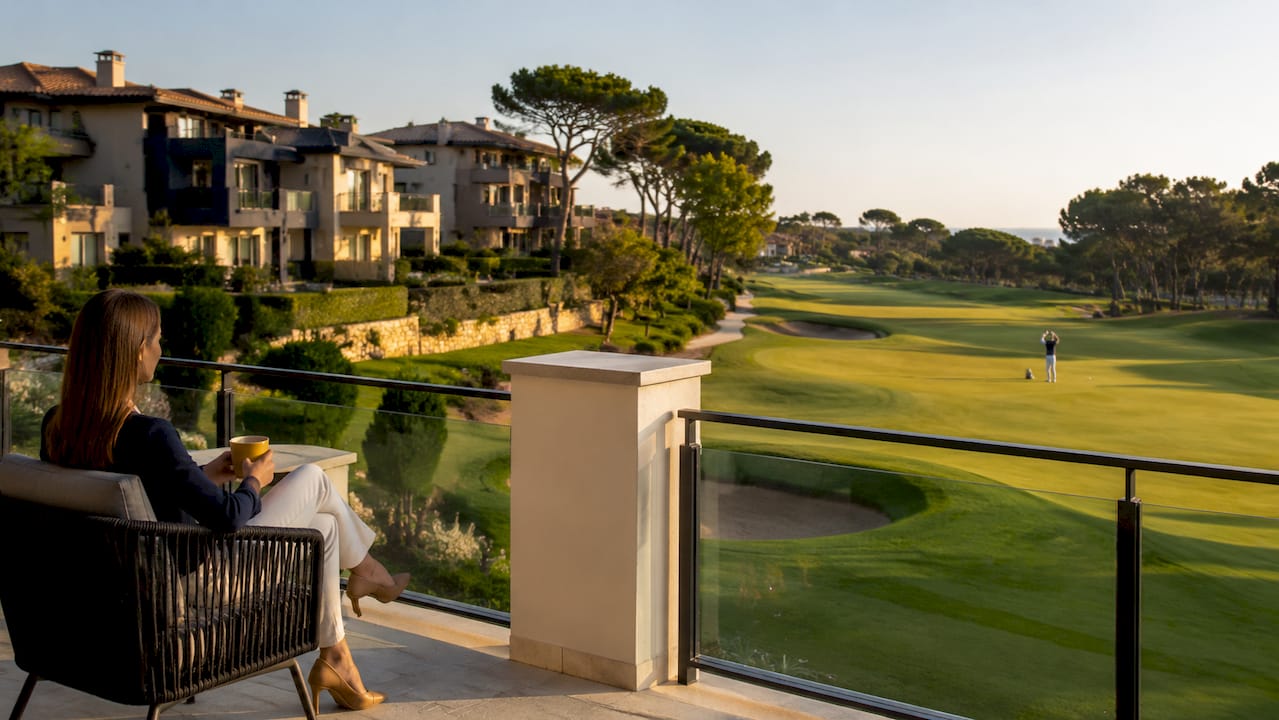
Course quality and designer pedigree
Tournament-status courses with designer pedigree from names such as Jack Nicklaus or Tom Fazio command higher resale premiums and greater market resilience. Brand association creates durable intangible value. A home on a Nicklaus-designed course carries a marketing advantage that persists through downturns.
Community lifestyle and social infrastructure
Buyers purchase security, social networks, and lifestyle in addition to property. The primary value driver is the “club life” and serene community aesthetic, not access to golf itself. Clubhouses, wellness facilities, gated security, and curated social events create an environment that attracts a specific, financially stable buyer profile. That profile sustains demand even when broader markets soften.
HOA governance and maintenance standards
Well-managed homeowners associations (HOAs) protect property values by maintaining shared spaces, enforcing aesthetic standards, and funding long-term reserves. Poorly managed HOAs and weak community reserves can become major liabilities, directly offsetting the premium a golf address commands. Governance quality is not a background detail. It is a core valuation factor.
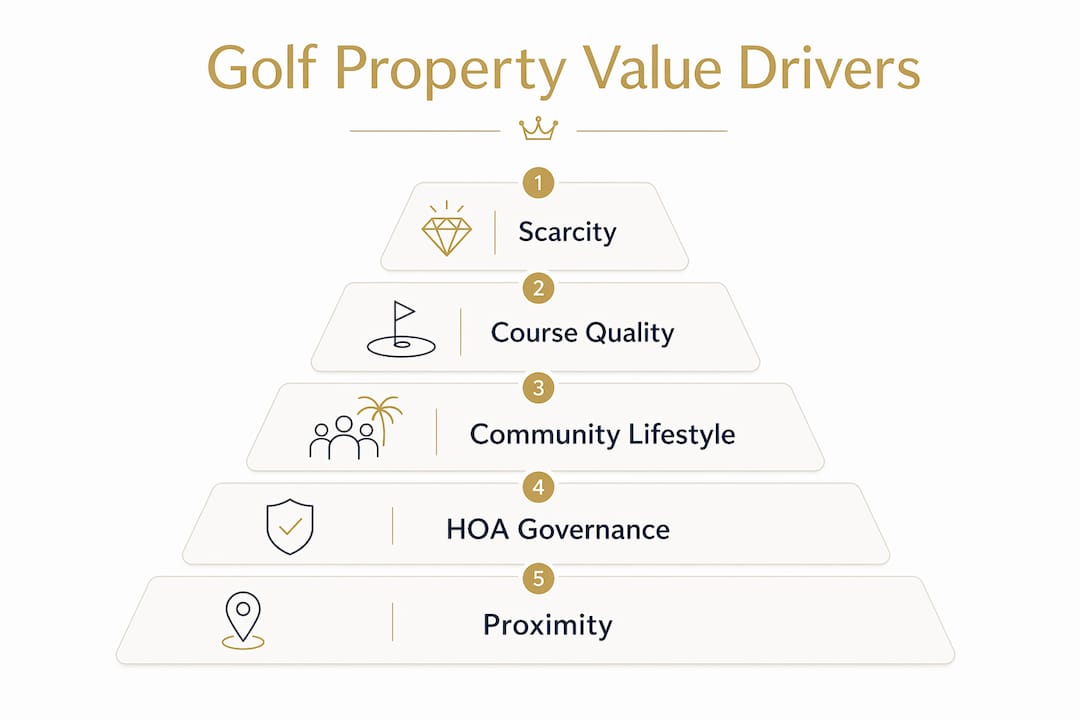
Proximity to infrastructure
Golf communities near international airports, cultural centres, and quality healthcare attract international buyers. On the Costa del Sol, communities in Estepona, Casares, and Duquesa benefit from proximity to Málaga Airport and the broader amenity network of the region. That connectivity widens the buyer pool and supports property price resilience across market cycles.
Pro Tip: Before buying in any golf community, request the HOA’s reserve fund statement for the past three years. A community spending down its reserves without replenishment is a warning sign that maintenance costs will eventually fall on individual owners.
Golf-front vs golf-adjacent: which holds more value?
The distinction between golf-front and golf-adjacent properties matters significantly for valuation, risk, and resale strategy.
| Feature | Golf-front | Golf-adjacent |
|---|---|---|
| View premium | High: direct fairway or green views | Moderate: partial or no direct views |
| Value floor | Protected by “borrowed landscape” effect | Less protected, more exposed to development |
| Resale speed | Faster due to aspirational appeal | Slightly slower, broader buyer pool |
| Stray ball risk | Present, particularly on par-3 holes | Minimal |
| Noise exposure | Higher during tournament or busy periods | Lower |
| Maintenance costs | Potentially higher for boundary fencing | Standard |
Golf-front properties benefit from what valuers call the “borrowed landscape” effect. The permanent green space in front of the property cannot be built upon. That guarantees an open outlook without the owner bearing any maintenance cost for it. The result is a value floor that most other property types cannot replicate.
The risks are real but manageable. Stray balls, noise during busy periods, and occasional boundary maintenance costs are the primary downsides. Buyers who understand these trade-offs typically accept them willingly in exchange for the view premium and resale advantage.
Golf-adjacent properties carry fewer physical risks and often attract a broader buyer pool, including those who want community benefits without direct course exposure. Their liquidity advantage is slightly lower than golf-front homes, but they remain significantly more liquid than equivalent non-community properties.
Pro Tip: If you are buying golf-front for investment rather than lifestyle, prioritise holes 1, 9, 10, and 18. These are the most photographed, most recognisable, and most desirable to future buyers.
What market trends in 2026 reinforce golf property values?
The 2026 market data for golf real estate is unusually strong across multiple metrics.
Golf course homes sell 50% faster than similar non-community properties. That liquidity advantage is critical for investors who need to exit positions without discounting. Faster sales mean less holding cost and less negotiating pressure from buyers.
“Golf real estate cap rates in Q1 2026 range from 10.32% to 12.11%, outperforming traditional commercial assets, which typically yield between 5% and 9%.” — Miami Select
That yield gap is substantial. An investor choosing between a standard commercial property at 7% and a golf community home at 11% is looking at a meaningful difference in annual return, before accounting for capital appreciation.
| Metric | Golf properties (2026) | Standard luxury properties |
|---|---|---|
| Appreciation rate | 15–25% above comparable | Baseline |
| Sales velocity | 50% faster | Baseline |
| Cap rate range | 10.32%–12.11% | 5%–9% |
| Resale premium vs non-community | Up to 35% higher | Baseline |
Structural demand factors such as remote working, tax migration, and lifestyle prioritisation have driven sustained interest in golf community homes. These are not cyclical trends. Remote workers relocating to warmer climates with lower tax burdens are choosing golf communities specifically because they offer a complete lifestyle environment. That demand is durable.
The Costa del Sol property market reflects this pattern clearly. International buyers from the UK, Germany, Scandinavia, and the Middle East continue to target golf communities in Estepona, Casares, and Manilva. Fixed supply and rising international demand create the conditions for sustained appreciation.
What should investors consider before buying a golf property?
The importance of golf property investment lies not just in choosing the right location, but in assessing the full operational context of a community.
-
Evaluate HOA financial health. Request reserve fund statements, annual budgets, and maintenance schedules. A community with strong reserves and transparent governance protects your investment. One with deferred maintenance and underfunded reserves transfers future costs to you.
-
Assess course management quality. A well-maintained course attracts members, sustains green fees, and keeps the community desirable. A course in decline drags property values with it. Ask about membership numbers, green fee trends, and any planned capital works.
-
Consider designer and tournament status. Courses associated with recognised designers or professional tournaments carry a marketing premium that survives market downturns. This is particularly relevant for golf property in Casares, where several courses carry strong brand recognition across European buyer markets.
-
Understand local supply constraints. Markets with strict planning controls and limited developable land offer stronger scarcity premiums. The western Costa del Sol benefits from both coastal geography and planning restrictions that cap new supply.
-
Balance yield with lifestyle value. Pure yield calculations miss a significant part of the return. A property you or your family use for part of the year generates lifestyle value that does not appear on a spreadsheet. Factor that in honestly when comparing golf property against other asset classes.
Pro Tip: Ask the estate agent for the last three years of sold prices within the specific community, not just the wider area. Golf community premiums are hyperlocal. A course on the wrong side of a motorway can trade at a significant discount to one two kilometres away.
How do golf properties fit within a luxury real estate portfolio?
Golf properties occupy a specific and useful position within a diversified luxury real estate portfolio.
- Inflation hedging through scarcity. Fixed supply and rising construction costs mean replacement value rises over time. Golf community homes benefit from this dynamic more than standard apartments.
- Rental income potential. Short-term rental demand for golf community homes is strong, particularly in markets like the Costa del Sol where golf tourism drives year-round occupancy. The La Duquesa rental market demonstrates consistent demand from European golfers seeking week-long stays.
- Contrast with other luxury types. Compared with urban luxury apartments or coastal villas without community infrastructure, golf properties sell faster and retain premiums more reliably during market corrections.
- Social and wellness appeal. The intangible value of community, security, and access to wellness facilities attracts a buyer profile that is less sensitive to price fluctuations. That buyer profile sustains demand during periods when discretionary buyers exit the market.
- Risk mitigation. The primary risks are course closure, HOA mismanagement, and oversupply in specific micro-markets. Buyers who conduct proper due diligence on governance and course health can mitigate all three.
Golf properties are not a substitute for diversification. They are a component of a portfolio that benefits from lifestyle demand, scarcity, and above-average liquidity relative to other luxury asset classes.
Key takeaways
Golf properties hold value because scarcity, lifestyle demand, and strong governance combine to create premiums that standard luxury real estate cannot match.
| Point | Details |
|---|---|
| Scarcity drives premiums | Fixed course boundaries prevent new supply, creating durable price floors in established communities. |
| Appreciation outperforms | Golf community homes appreciate 15–25% faster than comparable luxury properties outside communities. |
| Liquidity advantage | Golf course homes sell 50% faster than similar properties, reducing investor holding risk. |
| HOA quality is critical | Poorly managed HOAs erode premiums; always review reserve funds before committing to purchase. |
| Designer pedigree adds resilience | Courses with Nicklaus, Fazio, or tournament status command higher resale premiums through market cycles. |
What I have learned from watching golf property markets closely
The buyers who do best in golf real estate are not the ones who chase the most prestigious address. They are the ones who understand that the community around the course matters more than the course itself.
I have watched buyers pay a significant premium for a home on a famous fairway, only to find that the HOA was underfunded and the clubhouse was deteriorating. The view was spectacular. The investment was not. Conversely, I have seen buyers in less-celebrated communities in Casares and Manilva achieve strong resale results because the governance was tight, the maintenance was consistent, and the community had a waiting list for membership.
The shift I find most interesting in 2026 is the buyer who is not a golfer. Remote workers, retirees, and lifestyle-focused families are choosing golf communities for the security, the green space, and the social infrastructure. They have no intention of playing a round. That broadening of the buyer pool is structurally positive for values. It means demand is no longer dependent on golf participation rates.
My advice to any investor or buyer considering this asset class: spend as much time evaluating the HOA and the membership numbers as you spend evaluating the property itself. The course and the community are the product. The house is just where you sleep.
— Nina
Find your golf property on the Costa del Sol with Omnirealestate
Omnirealestate has spent over ten years working in the golf communities of the western Costa del Sol, covering Estepona, Casares, Sabinillas, Duquesa, and Manilva. The team understands which communities have strong governance, which courses are attracting international membership, and which micro-markets offer the best combination of lifestyle and investment return.
Whether you are searching for a golf-front villa, a community apartment, or a long-term investment property, Omnirealestate’s database of over 7,500 listings gives you immediate access to the full market. Start your search on the property search platform or explore the dedicated Costa del Sol investment guide to understand exactly where the strongest opportunities sit in 2026.
FAQ
Why do golf properties appreciate faster than standard luxury homes?
Golf community homes appreciate 15–25% faster than comparable non-community properties because fixed supply, curated lifestyle environments, and a financially stable buyer pool sustain demand through market cycles.
What is the “borrowed landscape” effect in golf property valuation?
The borrowed landscape effect refers to the permanent open green space that golf-front properties overlook without owning or maintaining. It creates a guaranteed outlook and a value floor that most other property types cannot offer.
How liquid are golf properties compared with other luxury real estate?
Golf course homes sell 50% faster than comparable non-community properties, making them significantly more liquid and reducing the holding risk for investors who need a clear exit strategy.
What cap rates do golf properties generate in 2026?
Golf real estate cap rates in Q1 2026 range from 10.32% to 12.11%, compared with 5%–9% for traditional commercial real estate. That yield advantage makes golf properties a compelling component of a diversified investment portfolio.
What is the biggest risk when buying a golf property?
The biggest risk is a poorly managed HOA or a course in operational decline. Both erode the community premium that justifies the purchase price. Always review HOA reserve funds and course membership trends before committing.