



La Duquesa rental investment works because of three converging forces: a diverse tenant base that sustains demand year-round, a regulatory environment that actively restricts new supply, and a price-to-yield structure that rewards investors who model their returns correctly. Puerto de la Duquesa sits within the Manilva municipality on the western Costa del Sol, roughly 20 kilometres from Estepona and 80 kilometres from Málaga airport. The area attracts Spanish second-home buyers, Northern European long-stayers, and international investors in roughly equal measure. That breadth of demand is the foundation of the investment case, and it is what separates La Duquesa from more saturated resort markets further east along the coast.
Why La Duquesa rental investment works: yields and income explained
Rental yield in La Duquesa is best understood as a net figure, not a headline number. Costa del Sol long-term net yields run between approximately 2.2% and 4.3% after taxes and operating costs. That range is narrower than many investors expect, but it reflects a market where capital values are rising steadily, which means total return includes appreciation as well as income.
Short-term holiday rentals appear more attractive on paper, with gross yields sometimes quoted between 3% and 5%. The reality is more complicated. Non-resident landlords pay 24% income tax on gross rental receipts, not net profit, and that single fact erodes the advantage quickly. Add management fees, cleaning costs, platform commissions, and higher vacancy risk, and the net position for short-term lettings often falls below a well-managed long-term tenancy.
Experienced investors model net yields by accounting for vacancy rates, community fees, property management charges, and the correct tax treatment from the outset. A property generating €12,000 per year in gross rent does not deliver €12,000 of income. Deducting a 10% management fee, community charges of roughly €1,500 per year, and the applicable tax liability can reduce net income by 35% to 45%. Modelling this before purchase, not after, is what separates profitable La Duquesa investments from disappointing ones.

Pro Tip: Use Omnirealestate’s rental yield guide to build a net yield model before you make an offer. Inputting realistic vacancy assumptions of 10% to 15% for long-term lets and 25% to 35% for short-term lets will give you a far more accurate picture of actual returns.
How do local regulations affect rental investment viability?
The regulatory picture in La Duquesa is the single most important factor for any investor to understand before committing capital. A Manilva municipal ordinance has suspended new tourist rental licences for three years in stressed zones, including Puerto de la Duquesa. Existing licences remain valid, but no new approvals are being granted during this period.
This creates a direct investment implication. Properties that already hold a valid tourist rental licence carry a scarcity premium that is entirely justified. The moratorium limits the supply of legally lettable short-term properties, which supports occupancy rates and nightly rates for those that do hold licences. Regulatory-driven scarcity of this kind materially underpins investment value in a way that no amount of marketing can replicate.
The compliance requirements extend beyond the licence itself. From 1 July 2025, online platforms must verify a unique VUDA registration code before a short-term rental listing can go live. Royal Decree 1312/2024 enforces this system, and platforms including Airbnb and Booking.com are now required to remove listings that cannot display a validated code. The practical steps for investors are:
- Confirm whether the property holds an existing, transferable tourist rental licence before exchanging contracts
- Check community statutes, as many residential complexes in La Duquesa prohibit short-term lettings regardless of municipal licence status
- Obtain an urban planning report to verify the property’s legal rental classification
- Complete national VUDA registration before listing on any booking platform
- Retain copies of all registration documents, as failure to comply results in listing removal and potential fines
Pro Tip: Treat the compliance process as a sequential timeline. Confirm the existing licence first, then complete VUDA registration, and only then list the property. Reversing this order is the most common and costly mistake investors make in this market. Omnirealestate’s team can guide you through the Manilva licensing process step by step.
What tenant and buyer profiles support rental demand?
La Duquesa’s rental market is resilient precisely because it does not depend on a single type of tenant. Diverse buyer and tenant profiles including Spanish base buyers, international long-stayers, and yield-focused investors all operate in the same market simultaneously. That breadth reduces the seasonal vulnerability that affects more tourism-dependent resorts.

The area’s appeal rests on several concrete advantages over other Costa del Sol locations. Puerto de la Duquesa marina provides a focal point for leisure and dining that attracts tenants who want more than a beach. The atmosphere is noticeably quieter than Marbella or Fuengirola, which appeals strongly to families, retirees, and remote workers seeking a longer-term base. Services including supermarkets, medical facilities, and international schools are within easy reach, making the area practical for year-round living rather than purely seasonal visits.
The tenant profiles that drive this demand break down as follows:
- Spanish buyers seeking a beach base within driving distance of Málaga or Seville, typically occupying for summer months and renting for the remainder of the year
- Northern European long-stayers from the UK, Germany, Scandinavia, and the Netherlands, often renting for three to six months during winter
- International investors purchasing specifically for rental income, targeting the mid-term rental market where demand from digital nomads and relocating professionals is growing
- Lifestyle buyers who intend to use the property personally but want rental income to offset costs during periods of non-occupation
Diversity of tenant demand mitigates the risks associated with tourism seasonality and regulatory shifts. When short-term holiday demand softens, mid-term and long-term tenants fill the gap. This is a structural advantage that investors in single-profile resort markets simply do not have.
What property types offer the best rental investment potential?
Property selection is where the investment thesis either holds together or falls apart. The table below compares the three main property types available in La Duquesa against the criteria that matter most to rental investors.
| Property type | Rental suitability | Management complexity | Typical tenant profile |
|---|---|---|---|
| Apartment | High. Suits long-term, mid-term, and short-term strategies | Low to moderate. Easier turnover and maintenance | Long-stayers, couples, remote workers |
| Townhouse | Moderate. Better for long-term or mid-term lets | Moderate. Garden and terrace upkeep adds cost | Families, Spanish base buyers |
| Villa | Lower for pure rental. Better as lifestyle asset with occasional letting | High. Pool, garden, and larger footprint increase costs | High-end short-term, owner-occupiers |
Apartments are the operational sweet spot for investors balancing personal use with rental income. They are easier to manage remotely, carry lower maintenance costs, and attract the widest range of tenants. For international buyers who intend to use the property themselves for part of the year, an apartment near the marina delivers both lifestyle value and rental practicality.
Micro-location within La Duquesa matters considerably. Properties within 500 metres of Puerto de la Duquesa marina command stronger short-term and mid-term rental demand due to the concentration of restaurants, bars, and the beach. Properties in quieter residential areas such as Duquesa Golf or Sabinillas attract long-term tenants who prioritise space and tranquillity over proximity to nightlife.
Average prices per square metre in Puerto de la Duquesa stand at approximately €3,536.61 for houses and €4,307.54 for owner-occupied apartments in 2026. Apartments command a higher price per square metre than houses, reflecting their stronger rental demand and lower management burden. For investors calculating entry cost against projected yield, this pricing structure means a well-located two-bedroom apartment near the marina represents a more capital-efficient entry point than a larger villa at a similar total price.
Key takeaways
La Duquesa rental investment works because regulatory scarcity, tenant diversity, and net yield discipline combine to create a resilient and capital-efficient opportunity for international buyers in 2026.
| Point | Details |
|---|---|
| Net yields, not gross | Long-term net yields of 2.2% to 4.3% are realistic; always model after tax, fees, and vacancy. |
| Licence scarcity adds value | The three-year moratorium on new tourist licences makes existing licensed properties more valuable. |
| VUDA compliance is non-negotiable | From July 2025, all short-term listings require a validated VUDA code or face removal from platforms. |
| Apartments lead on practicality | Two-bedroom apartments near the marina offer the best balance of yield, management ease, and tenant breadth. |
| Tenant diversity reduces risk | A mix of Spanish, European, and international tenants insulates the market from seasonal downturns. |
What I have learned from watching this market closely
The investors who do well in La Duquesa are not the ones chasing the highest headline yield. They are the ones who do the legal groundwork first and treat regulatory compliance as a competitive advantage rather than an administrative burden.
I have seen buyers lose months of rental income because they assumed a licence would transfer automatically with the property. It does not always. Community statutes can override a valid municipal licence entirely, and discovering this after completion is an expensive lesson. The due diligence checklist is not optional paperwork. It is the investment itself.
What strikes me most about La Duquesa is how the tenant mix insulates it from the volatility that hits more fashionable parts of the Costa del Sol. When Marbella’s short-term market softens because of a weak summer season, La Duquesa’s long-term and mid-term tenants keep paying rent. That structural resilience is underappreciated by investors who only look at the yield numbers.
My practical advice is to prioritise properties with existing, confirmed licences, even if the purchase price reflects that premium. The scarcity created by the moratorium means that premium is likely to hold. Pair that with a realistic net yield model and a clear view of which tenant profile you are targeting, and La Duquesa offers a genuinely sound investment case. The area’s fundamentals have not changed. The regulatory environment has simply made the case clearer.
— Nina
How Omnirealestate helps investors find the right property
Omnirealestate has spent over a decade working exclusively in the western Costa del Sol, covering Estepona, Manilva, Sabinillas, and La Duquesa. That focus means the team understands which properties carry valid rental licences, which communities permit short-term lettings, and where the strongest tenant demand sits within each micro-location.
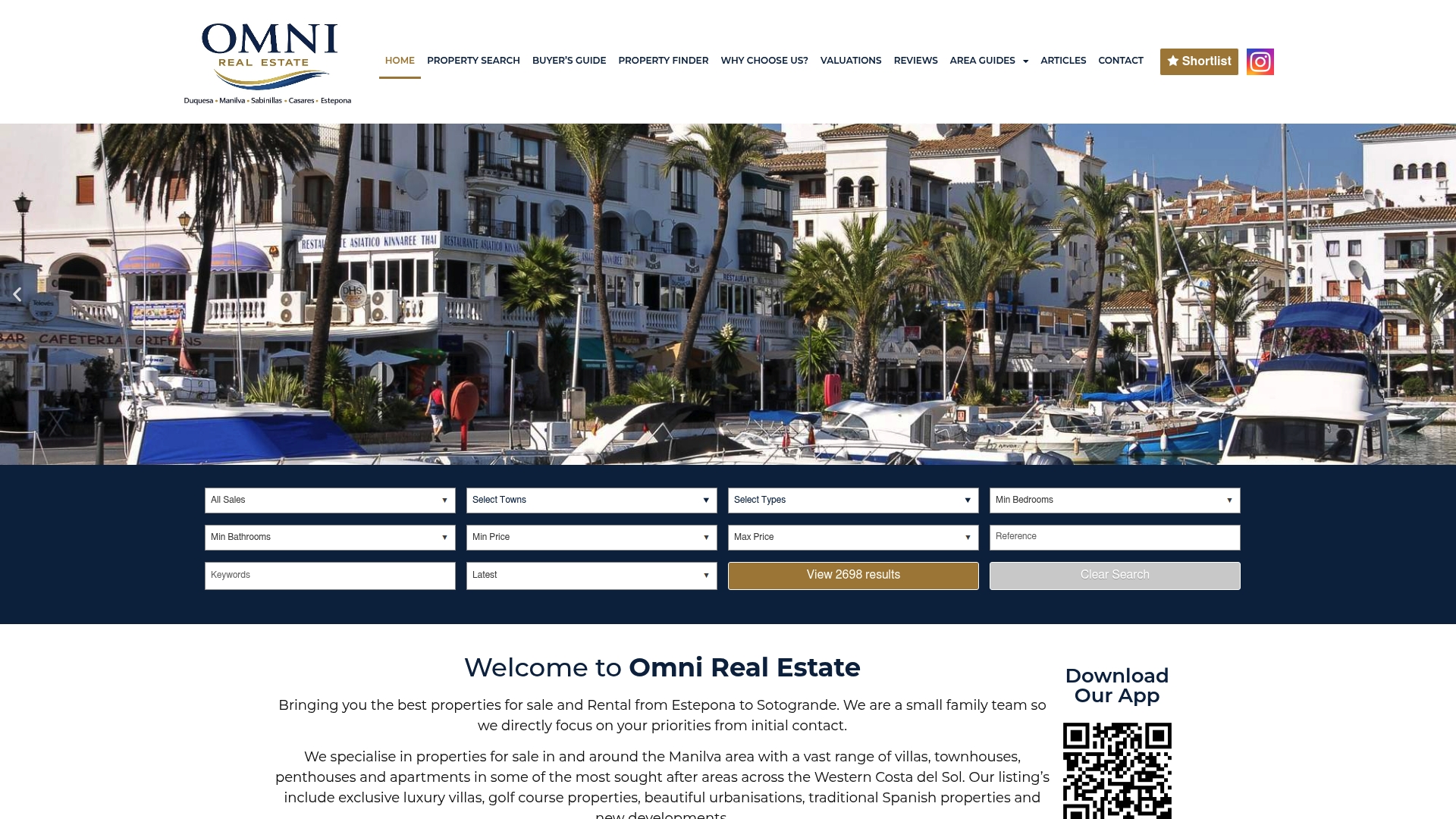
For international investors evaluating La Duquesa, Omnirealestate offers access to a curated database of over 7,500 listings, including luxury investment properties in Manilva that combine capital appreciation potential with strong rental demand. The team provides personalised guidance on legal compliance, yield modelling, and property selection aligned with your specific investment goals. Reach out directly for a tailored shortlist of La Duquesa properties that match your strategy.
FAQ
What net rental yield can I expect in La Duquesa?
Long-term net yields in La Duquesa typically fall between 2.2% and 4.3% after taxes, management fees, and community charges. Short-term holiday lets may show higher gross figures but carry greater tax exposure and operating costs.
Can I still get a tourist rental licence in La Duquesa?
A Manilva municipal ordinance has suspended new tourist rental licences in Puerto de la Duquesa for three years. Investors should focus on properties that already hold a valid, transferable licence.
What is the VUDA registration code and why does it matter?
The VUDA code is a unique registration number required for all short-term rental listings on platforms such as Airbnb and Booking.com from 1 July 2025. Listings without a validated VUDA code are removed from platforms under Royal Decree 1312/2024.
Which property type works best for rental investment in La Duquesa?
Apartments offer the strongest combination of rental demand, management ease, and tenant diversity. Two-bedroom apartments near Puerto de la Duquesa marina are particularly well suited to both mid-term and long-term rental strategies.
Are community restrictions a risk for rental investors?
Yes. Some residential complexes in La Duquesa prohibit short-term lettings through their community statutes, regardless of whether a municipal licence exists. Checking community rules before purchase is a critical step in the due diligence process.