


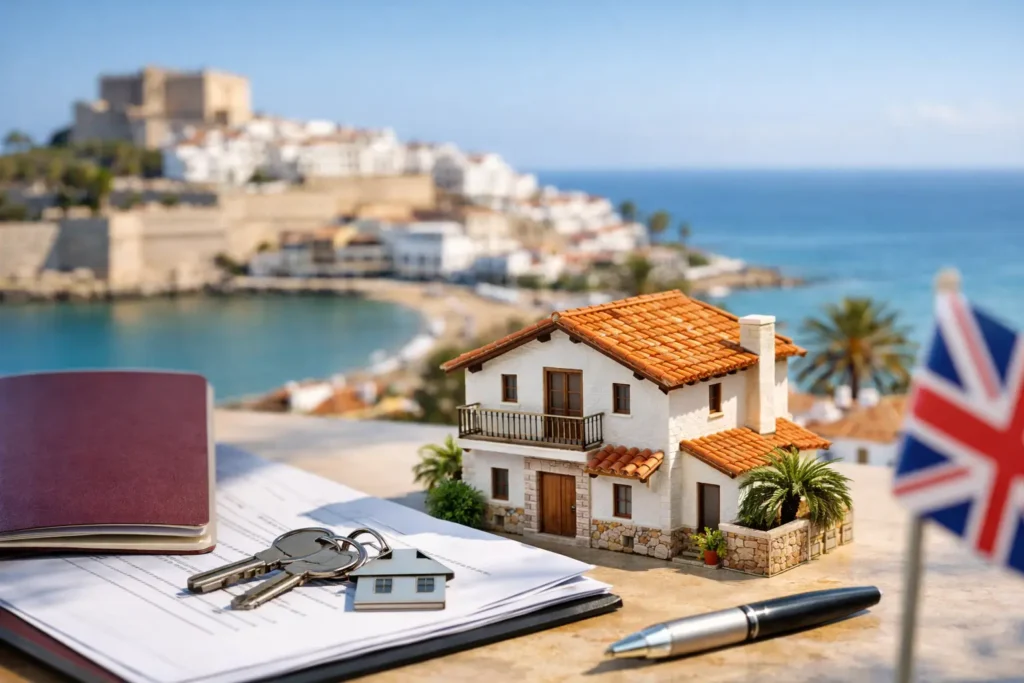
A lot of British buyers ask the same question quite early on – can Brits get a mortgage in Spain, or does buying after Brexit mean paying in cash? The short answer is yes, British nationals can still get a Spanish mortgage. The longer answer is that it tends to involve a bigger deposit, closer affordability checks and a bit more paperwork than many buyers expect.
That does not mean it is difficult in the wrong sense of the word. It simply means the process works differently from the UK, and the buyers who do best are usually the ones who understand the numbers before they start viewing property.
Can Brits get a mortgage in Spain after Brexit?
Yes. Brexit did not close the door on British buyers getting finance in Spain. UK nationals are now treated as non-resident third-country buyers unless they have Spanish residency, but Spanish banks continue to lend to non-residents every day.
What changes is the risk profile in the eyes of the lender. For most non-resident applicants, banks will usually lend a lower percentage of the purchase price or valuation, and they will examine income, debt and outgoings carefully. If you are resident in Spain, employed there and paying tax there, the lending options can look more like those available to Spanish residents. If you live in the UK and are buying a holiday home or investment property, expect the non-resident route.
How much can British buyers usually borrow?
This is where expectations need to stay realistic. Many British buyers are used to seeing high loan-to-value products in the UK. In Spain, non-residents are commonly offered around 60 to 70 per cent of the lower of the purchase price or bank valuation.
That means you may need a deposit of 30 to 40 per cent, and that is before purchase costs. Those buying a resale property also need to budget for taxes, notary fees, land registry fees, legal costs and mortgage-related charges where applicable. Depending on the purchase, buyers often allow roughly 10 to 13 per cent on top of the price for costs, although exact figures vary.
So if you are buying at 300,000 euros, you should not assume a bank will lend 240,000 euros just because that might feel familiar from a UK perspective. If the bank values the property lower than the agreed price, the loan calculation will usually be based on the lower figure.
What do Spanish banks look at?
Lenders want to see that the mortgage is affordable now and still likely to be affordable if rates or circumstances change. They will usually review employed income, self-employed income, pensions, existing loans, credit commitments and monthly living costs.
For salaried applicants, that often means payslips, tax returns, bank statements and an employer reference. For self-employed buyers, the process can be more detailed. Spanish banks tend to want a clear picture of stable earnings over time, not just one strong recent year. Retired buyers using pension income can also be eligible, provided their income is provable and fits the bank’s affordability model.
Age matters too. Some lenders have maximum age limits at the end of the mortgage term, so older applicants may be offered a shorter term rather than a straight refusal. That affects monthly payments, which is why early planning matters.
Can Brits get a mortgage in Spain for a holiday home or investment?
Yes, and this is one of the most common reasons British buyers apply. A holiday home purchase is very normal from a lender’s point of view, particularly in established coastal markets with steady demand. Investment purchases are also possible, although the bank will still focus primarily on your personal affordability rather than projected rental income.
Some buyers assume that expected holiday rental income will make the mortgage application easier. Sometimes it helps the overall picture, but many banks take a cautious view of future rental earnings unless there is a strong and documented track record. If the mortgage only works on paper because the property must be let at full occupancy, that is usually a warning sign.
For that reason, it is better to buy at a level that remains comfortable even with modest or seasonal rental income. That is especially true on the Costa del Sol, where demand can be strong but owners still need to think about low season, management costs and licensing rules.
Fixed or variable mortgage – which is better?
Spanish mortgages are available on both fixed and variable rates, and the right option depends on your priorities. Fixed rates appeal to many UK buyers because they offer certainty. If your goal is a predictable monthly cost for a holiday home or retirement property, a fixed deal can feel simpler and safer.
Variable rates can sometimes start lower, but they move with the relevant benchmark and can rise over time. Some buyers are comfortable with that if they expect to repay early or if the initial pricing is attractive enough. Others would rather pay a little more for stability.
There is no universal best option. It depends on whether you prioritise lower short-term payments or long-term certainty, how long you plan to keep the property, and how sensitive your budget is to rate changes.
What paperwork will you need?
This is the part that often feels more time-consuming than difficult. Spanish lenders are document-driven, and overseas applications naturally involve extra checks. Most British buyers should expect to provide proof of identity and address, bank statements, tax returns, proof of income, details of assets and liabilities, and information about the property being purchased.
You will also need an NIE number, which is the foreigner identification number used for legal and financial transactions in Spain. If documents are in English, a lender or legal adviser may require translated or certified copies depending on the case.
The key is to prepare thoroughly rather than rushing once you have found the right property. A well-presented application often moves more smoothly than one where documents arrive in stages.
Using a Spanish mortgage broker or going direct
Both routes can work. Going directly to a bank may suit buyers who already have a banking relationship in Spain or who are comfortable comparing products themselves. Using a broker can save time, especially for non-residents who want a clearer view of which lenders are most likely to accept their profile.
That is particularly helpful for self-employed applicants, buyers with income from more than one source, or anyone who wants to compare how different banks treat exchange rate exposure, age limits or debt calculations. The right support does not guarantee approval, but it can reduce wasted applications and help set sensible expectations from the start.
Common reasons applications run into trouble
The biggest issue is usually not nationality. It is affordability. Buyers sometimes focus on the deposit and forget that the bank will review all existing commitments, including UK mortgages, personal loans, credit cards and dependent costs.
Another common problem is assuming the agreed sale price will automatically be accepted for lending purposes. If the valuation comes in lower, the buyer may need to bridge the gap with additional cash. Irregular self-employed income can also create complications, as can missing paperwork or unexplained bank transactions.
Occasionally, the property itself is the issue. Certain banks are more cautious with rural homes, properties needing significant reform, or homes with legal or planning irregularities. This is one reason due diligence matters just as much as mortgage approval.
How to put yourself in the best position
If you are serious about buying, it helps to get your finances organised before making an offer. Have your deposit funds clearly traceable, reduce unnecessary debt where possible, and be realistic about your full buying budget rather than just the headline purchase price.
It also helps to think carefully about the type of property you are buying. A straightforward resale flat or villa in a well-established area can be easier from a lending perspective than a more unusual property. In parts of southern Spain such as Estepona, Casares or La Duquesa, buyers often benefit from speaking to local professionals early because micro-location, building quality and community setup can all affect both lending confidence and future resale appeal.
At Omni Real Estate, this is often where practical local guidance makes a real difference. The right property is not just the one you love on viewing day. It is the one that fits your budget, your plans and the reality of the buying process.
So, can Brits get a mortgage in Spain?
Yes, they can, and many do. But the strongest buyers approach it with clear eyes. You will usually need a healthy deposit, you should expect more admin than in a domestic UK purchase, and the lender will want a solid picture of affordability rather than guesswork.
If you treat the mortgage as part of your property search rather than something to sort out afterwards, the whole process tends to feel calmer. And when the finance is properly lined up, choosing between a frontline beach flat, a golf property or a full-time home in the sun becomes a much more enjoyable decision.