


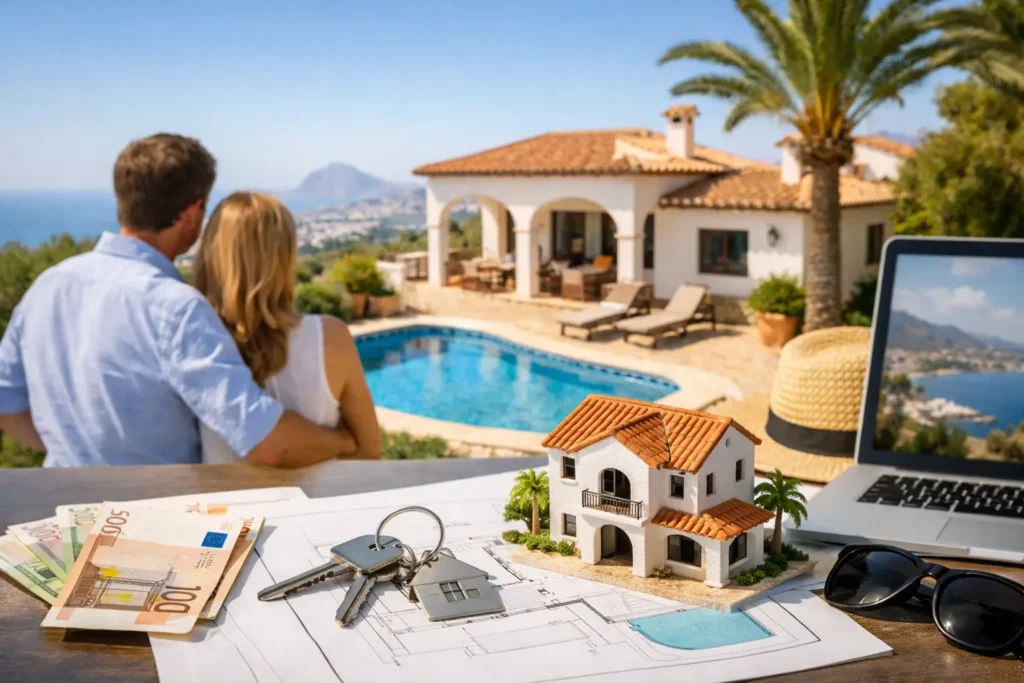
One couple we spoke to had narrowed their search to two homes. One had the sea view they had imagined for years. The other was less dramatic, but ten minutes closer to restaurants, easier to lock up and leave, and far better suited to winter stays. That is usually the real question when working out how to choose Spanish holiday home options – not which property looks best in the photos, but which one will still feel right after the first summer.
Buying a holiday home in Spain is exciting, but it is also easy to get pulled towards the wrong priorities. A beautiful terrace or stylish interior can win you over quickly. What matters more is how you plan to use the property, how often you will visit, whether you want rental income, and how much responsibility you are happy to take on from abroad.
How to choose a Spanish holiday home for your lifestyle
The best starting point is not property type or even budget. It is lifestyle. A holiday home for six family visits a year is very different from a place you expect to use for long winter breaks, retirement planning, or a mix of personal use and short-term lets.
If your visits will mostly be short breaks, convenience tends to matter more than size. You may be better with a well-kept flat or townhouse close to the beach, amenities and airport routes, rather than a larger villa that needs regular upkeep. If you expect to stay for months at a time, storage, outside space, winter sun orientation and year-round local life become far more important.
This is where buyers often need honest guidance. The property that feels luxurious for two weeks in August can be less appealing in January if the area goes quiet, the terrace gets little sun, or the nearest supermarket requires a car every time.
Choose the area before the property
Most buying mistakes happen when people fall for a home before they understand the location properly. In southern Spain, even neighbouring areas can offer a very different pace of life, price point and atmosphere.
Some buyers want a lively marina setting with restaurants on the doorstep. Others want a quieter residential area where they can properly switch off. Some are focused on beach access, while others are happier slightly inland if it means more space and stronger value. There is no single right answer, but there is usually a right fit.
Along the Costa del Sol, that difference can be seen clearly. A buyer looking at Estepona may value a broader town feel and a wider choice of amenities, while someone drawn to La Duquesa or Sabinillas may prefer a more relaxed pace and better value for a lock-up-and-leave holiday home. Casares can appeal to buyers who want views, golf or a more tranquil setting. The point is not to chase a postcode. It is to match the area to the life you will actually lead there.
Spend time thinking about what you want within 10 to 15 minutes of your door. Beach, golf, cafes, walking routes, medical services, year-round community, airport access – these daily practicalities shape your enjoyment far more than brochure language ever will.
Set a budget that includes the real cost of ownership
The purchase price is only part of the picture. When deciding how to choose Spanish holiday home options sensibly, you need a budget that reflects the full cost of buying and owning in Spain.
That means factoring in purchase costs, ongoing community fees where applicable, IBI and other local charges, insurance, utilities, maintenance and possible management if you are not in Spain regularly. Newer developments may offer attractive facilities, but those facilities often come with higher monthly costs. A detached villa may give you privacy, but it also usually means more upkeep than a flat within a managed community.
There is also a practical trade-off between stretching for the perfect home and leaving room for comfort. Many buyers are happier in the long run when they buy slightly below their maximum budget and keep funds available for furnishing, improvements or simply enjoying the property without financial pressure.
Think carefully about property type
A holiday home should suit the way you live when you are away, not the way you live at home. That sounds obvious, but many buyers still apply the wrong criteria.
Flats are often the easiest choice for overseas owners. They can offer security, shared maintenance and easy access to pools or communal gardens. For buyers who want simplicity and minimal hassle, they make a lot of sense. The downside is less privacy, service charges and, in some communities, tighter rules around rentals or renovations.
Townhouses sit somewhere in the middle. They can provide more space and character, often with terraces or small gardens, while remaining easier to manage than a villa. Villas appeal to buyers who prioritise privacy, entertaining space and independence, but they demand more from you in terms of maintenance, gardening and security.
It also helps to think about stairs, parking and access earlier than you think necessary. A penthouse with stunning views may be perfect now, but if the lift is unreliable or parking is awkward in peak season, that glamour can wear off quickly.
If rental income matters, be honest about that from the start
Some buyers want a pure lifestyle purchase. Others want the property to help cover its costs through holiday lets. Both approaches are valid, but they lead to different decisions.
A strong rental property usually needs broad appeal. Walkability, pool access, reliable sun, sensible layout and easy maintenance matter more than highly personal design choices. A home you buy only for yourself can be more individual. If you try to do both without clarity, you can end up compromising on both fronts.
You should also look closely at whether the building or area is suitable for short-term rental, what local rules apply, and what level of management you would need if you are based in the UK. Gross income figures can sound attractive, but net returns depend on occupancy, running costs and how much support is required on the ground.
Look beyond the photographs
Good marketing can make almost any property look tempting. The real value appears when you assess the details that are harder to capture online.
Orientation is one of the biggest. A terrace that gets lovely morning light in July may feel cold for much of the rest of the year if your main use is spring, autumn or winter. Noise is another. A property can appear peaceful during a midweek viewing and feel very different in peak holiday periods.
Build quality, storage, air conditioning, heating, internet reliability and the general condition of communal areas all deserve careful attention. If you are buying in an established community, look at how well it is maintained. If you are considering an off-plan or new-build property, developer reputation, specification and delivery timelines matter just as much as the show home finish.
This is often where local knowledge really helps. A good agent should tell you not just what is attractive about a property, but where the compromises are likely to be.
How to choose Spanish holiday home options with resale in mind
Even if you expect to keep the property for many years, resale matters. Lives change. Travel habits change. Family needs change. The strongest holiday homes tend to be the ones that would still appeal to the next buyer.
That usually means prioritising location, practical layout, outside space, parking and year-round usability over fads or features that are expensive but niche. A property that is easy to enjoy, easy to maintain and easy to explain to future buyers is normally the safer long-term choice.
This does not mean buying something bland. It means recognising which features support lasting demand and which ones simply create a strong first impression.
Work with people who will challenge you when needed
Buying abroad is easier when you have guidance you trust. Not just someone to send listings, but someone willing to narrow the field, point out drawbacks and keep you focused on what you actually need. That personal approach matters especially if you are viewing on a short trip and trying to make sense of different areas, communities and price levels quickly.
At Omni Real Estate, that is often the difference we see between a rushed purchase and a confident one. Buyers usually do not need more options. They need better-matched ones, and someone local who can explain why one property will serve them better than another.
The right Spanish holiday home is rarely the one that tries to do everything. It is the one that fits your lifestyle comfortably, works financially, and still feels like a pleasure each time you unlock the door.