



Selling your home quickly in Spain requires simultaneous readiness across three fronts: pricing, legal paperwork, and presentation. Express sales under one week represent 13% of all Spanish property transactions in Q1 2026. That figure is exceptional, not accidental. The sellers who achieve it prepare to sell before they list, not after. To prepare property for fast sale in Spain, you need your Energy Performance Certificate, your Nota Simple, and your pricing strategy locked in before a single buyer walks through the door.
What legal documents do you need before listing your property?
Legal readiness is the single biggest factor separating fast sales from slow ones. Legal-pack readiness can reduce Spain’s average 77-day sale time to under 45 days. That is not a marginal improvement. It is the difference between completing before summer and watching your listing go stale.
Energy Performance Certificate (CEE)
Spain’s Energy Performance Certificate, known as the CEE, is mandatory before you market your property. Fines for non-compliance range from €300 to €600. More damaging than the fine is the delay. Buyers who spot a missing certificate lose confidence and move on. Commission a qualified technician at least three weeks before your planned listing date.
Nota Simple from the Registro de la Propiedad
The Nota Simple is a low-cost document from Spain’s property registry that confirms ownership and lists any charges or encumbrances on the property. It costs roughly €7 and takes a few days to obtain. Retrieving it before marketing acts as a consistency check. Ownership discrepancies or undisclosed mortgages discovered mid-negotiation are among the most common reasons homes sell slowly in Spain.
Other documents to gather upfront
- IBI receipt: Your most recent annual property tax receipt proves the account is current.
- Community fee certificate: Issued by your community administrator, this confirms no outstanding service charges.
- Habitation certificate (cédula de habitabilidad): Required in many Spanish regions to confirm the property meets residential standards.
- Mortgage cancellation certificate: If a mortgage has been repaid, confirm it is formally cancelled at the registry.
“Delays in legal documentation, especially the Energy Performance Certificate, frequently cause sale slowdowns despite genuine buyer interest.”
Pro Tip: Gather all documents in parallel, not in sequence. Waiting for one before starting the next adds weeks to your timeline for no reason.
How should you price your property to attract fast buyers?
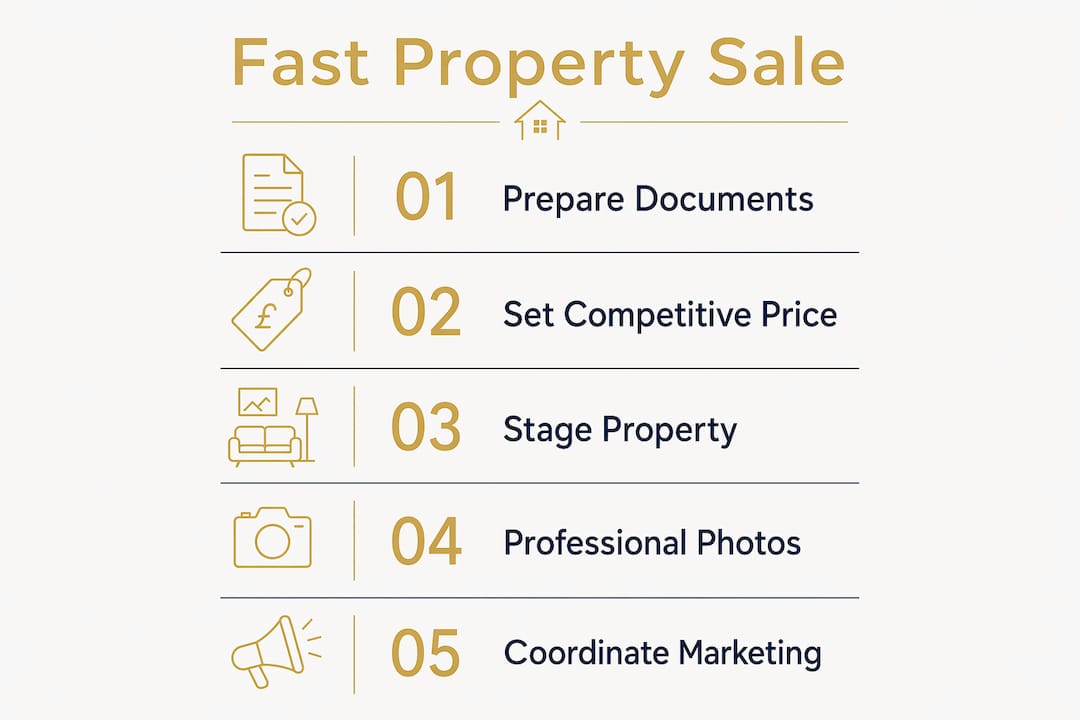
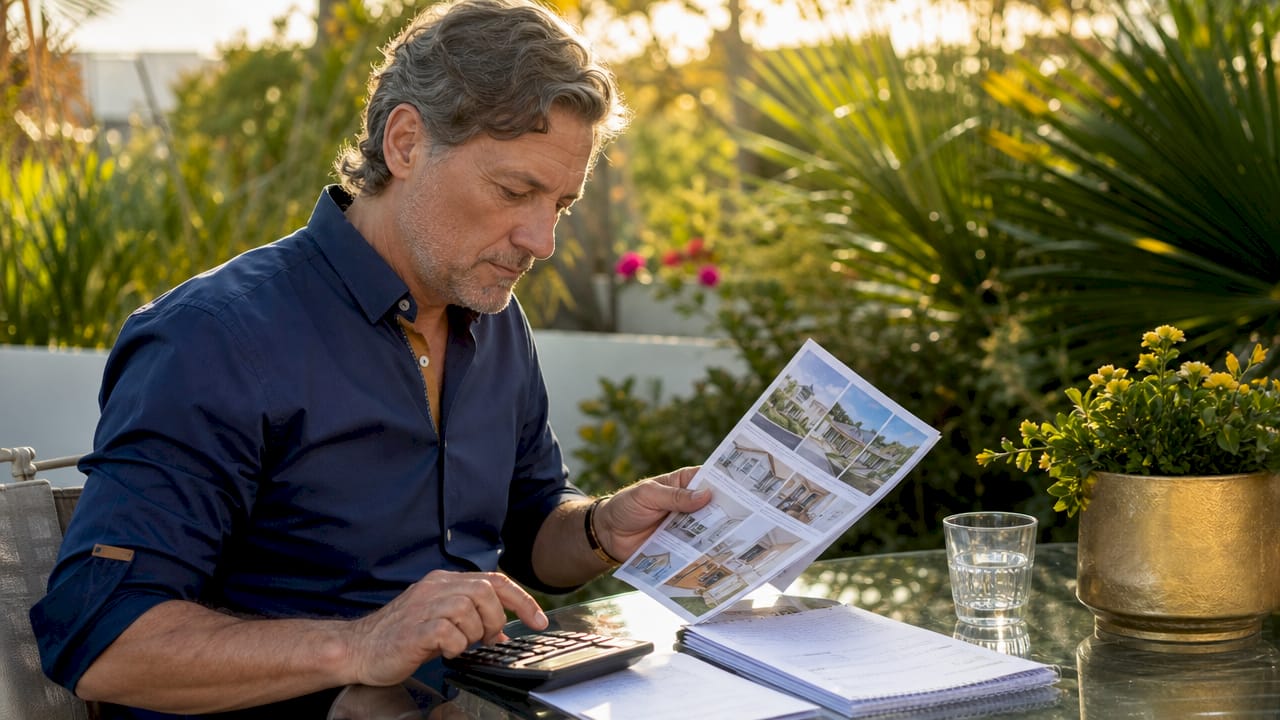
Pricing is the lever most sellers pull last. It should be the first. Pricing 2%–5% below market triggers competing offers, which is the fastest route to a completed sale in Spain’s current market. Overpricing by even a small margin signals to buyers that you are not serious, and serious buyers move on quickly.
How to set a competitive asking price
- Commission a professional valuation. A qualified valuer gives you a defensible figure based on comparable sales, not wishful thinking. Omnirealestate offers professional property valuations specifically calibrated for the Western Costa del Sol market.
- Study recent local sales data. Platforms like Idealista publish quarterly price data by municipality. Use sales prices, not asking prices. The gap between the two is often significant in areas like Estepona, Manilva, and Casares.
- Account for buyer demographics. The 2026 buyer pool in coastal Spain includes a growing segment of digital nomads and remote workers. These buyers prioritise broadband connectivity, outdoor space, and home office potential. A property that ticks those boxes can command a sharper price without sitting long.
- Set a review trigger. If you receive fewer than three viewing requests in the first ten days, reduce the price. Waiting longer compounds the problem.
Pro Tip: Avoid round-number pricing. A property listed at €298,000 consistently outperforms one listed at €300,000 in click-through rates on Spanish property portals.
What home staging strategies work best for a quick sale in Spain?
First impressions in Spanish real estate are formed online, not at the front door. Buyers scroll through dozens of listings before booking a single viewing. Your photographs are your first showing. Professional staging, including depersonalising spaces and highlighting features like home offices and terraces, significantly accelerates sale speed in the current market.
Presentation priorities before photography
- Declutter every room. Remove personal photographs, excess furniture, and anything that makes a room feel smaller or more specific to your lifestyle.
- Deep clean, including outdoor areas. In Spain, terraces, pools, and gardens are selling features. A dirty pool or cracked terrace tile costs you buyers before they step inside.
- Complete minor repairs. Cracked tiles, dripping taps, and broken shutters signal neglect. Buyers mentally inflate repair costs when they spot them.
- Neutralise colour schemes. Bold wall colours narrow buyer appeal. A coat of white or warm grey paint is one of the cheapest and most effective preparation steps available.
- Stage the home office space. With remote working now a permanent feature of buyer expectations, a dedicated desk area with good natural light is a genuine selling point.
Pro Tip: Coordinate property improvements to finish the day before your photographer arrives. Staging a property weeks before photography means it will look lived-in again by shoot day.
Photography and video for digital marketing
| Format | Purpose | Impact |
|---|---|---|
| Professional photography | Primary listing images on portals | High: drives click-through rates |
| Short-form video walkthrough | Social media and WhatsApp sharing | High: increases enquiry volume |
| Virtual tour (360°) | International buyers who cannot visit | Medium: reduces wasted viewings |
| Drone footage | Properties with sea views or large plots | High: differentiates premium listings |
How do you coordinate marketing and legal readiness for the fastest sale?
Express sales happen where pricing, condition, and documentation are all aligned. Passive listing is rarely sufficient. The sellers who sell in under a week launch with everything ready simultaneously. Those who list first and sort paperwork later consistently experience the delays that push Spain’s average sale time towards 77 days.
A coordinated launch sequence
- Compile the full legal pack. CEE, Nota Simple, IBI receipt, community fee certificate, and habitation certificate should all be in hand before you contact an agent.
- Complete all staging and repairs. Book your photographer only once the property is fully prepared.
- Brief your agent on buyer targeting. Specify whether you are targeting local buyers, British or Northern European buyers, or the growing digital nomad segment. Each group uses different portals and responds to different messaging.
- Publish bilingual listings. Spanish and English listings reach a significantly wider audience on the Costa del Sol. French and German versions add further reach for the Western Costa del Sol market.
- Respond to enquiries within two hours. Buyer interest peaks in the first 48–72 hours of a listing going live. Slow responses kill momentum.
Coordinated vs. uncoordinated approach
| Approach | Typical outcome | Sale timeline |
|---|---|---|
| Legal pack, staging, and pricing ready at launch | Multiple early enquiries, fast offers | Under 45 days |
| Listing live before documents are ready | Buyer confidence drops, delays at offer stage | 77+ days |
| Overpriced with good presentation | Few enquiries, price reductions required | 90+ days |
| Underpriced without staging | Fast sale but below market value | Under 30 days |
For a detailed walkthrough of the legal steps involved, Omnirealestate’s guide to selling property in Spain covers the full process from preparation to completion.
Key takeaways
Sellers who prepare property for fast sale in Spain by aligning legal documents, competitive pricing, and professional presentation before listing consistently outperform those who treat these as separate, sequential tasks.
| Point | Details |
|---|---|
| Legal documents first | Obtain CEE, Nota Simple, IBI receipt, and community fee certificate before marketing begins. |
| Price below market | Listing 2%–5% under market value triggers competing offers and shortens sale time. |
| Stage before photography | Complete all repairs and staging the day before your professional shoot for maximum impact. |
| Launch everything simultaneously | Coordinated legal, pricing, and marketing readiness reduces sale time from 77 days to under 45. |
| Respond fast to enquiries | Reply within two hours of first contact to maintain buyer momentum during the critical launch window. |
What I have learned about selling fast in Spain
Sellers often treat legal preparation, pricing, and presentation as three separate projects to tackle one after another. That sequencing is the root cause of most slow sales I have seen on the Costa del Sol. By the time the Energy Performance Certificate arrives, the buyer who made an early enquiry has already moved on to a property where the seller had everything ready.
The market in 2026 is not forgiving of hesitation. Buyers, particularly those relocating from the UK, Northern Europe, or working remotely, are well-researched and move quickly when they find the right property. What slows them down is not price. It is uncertainty. A missing document, an unanswered question about community fees, or a listing with poor photographs all create doubt. Doubt kills deals.
The sellers I have seen complete in under three weeks share one habit: they treated the preparation phase as the job. The listing was almost an afterthought. They had their legal pack ready, their property photographed professionally, and their price set on evidence rather than hope. When the right buyer appeared, there was nothing to slow the transaction down.
The legal process for international sellers in Spain has specific requirements that catch many owners off guard. Getting across those requirements early is not bureaucracy for its own sake. It is the fastest route to a completed sale.
— Nina
How Omnirealestate helps sellers achieve fast results
Omnirealestate works with sellers across Estepona, Casares, Sabinillas, Duquesa, and Manilva to prepare properties for the market with everything in place from day one.
The team provides accurate property valuations grounded in current Western Costa del Sol sales data, helping sellers set prices that attract buyers rather than deter them. Omnirealestate also guides clients through legal document preparation, professional photography coordination, and bilingual listing creation for international reach. With over 7,500 listings in their database and more than ten years operating in the Duquesa area, the team understands exactly what buyers in this market respond to. If you are preparing to sell, the full selling guide on the Omnirealestate website is the practical starting point.
FAQ
How long does a property sale take in Spain?
The average property sale in Spain takes around 77 days. Sellers with full legal documentation and competitive pricing in place before listing can reduce this to under 45 days.
What documents do I need to sell my property in Spain?
The mandatory documents include the Energy Performance Certificate (CEE), a recent Nota Simple, the latest IBI tax receipt, and a community fee certificate confirming no outstanding charges.
What is the Energy Performance Certificate and when do I need it?
The Energy Performance Certificate (CEE) is a legally required document rating your property’s energy efficiency. It must be obtained before you market the property, with fines of €300–€600 for non-compliance.
Does pricing below market value really speed up a sale in Spain?
Pricing 2%–5% below the market average generates competing offers, which is the most reliable mechanism for a fast sale. Overpricing, even slightly, reduces enquiry volume and extends time on market.
Why do properties take a long time to sell in Spain?
The most common reasons homes sell slowly in Spain are missing or delayed legal documents, overpricing relative to comparable sales, and poor quality listing photography that fails to generate viewing requests.