


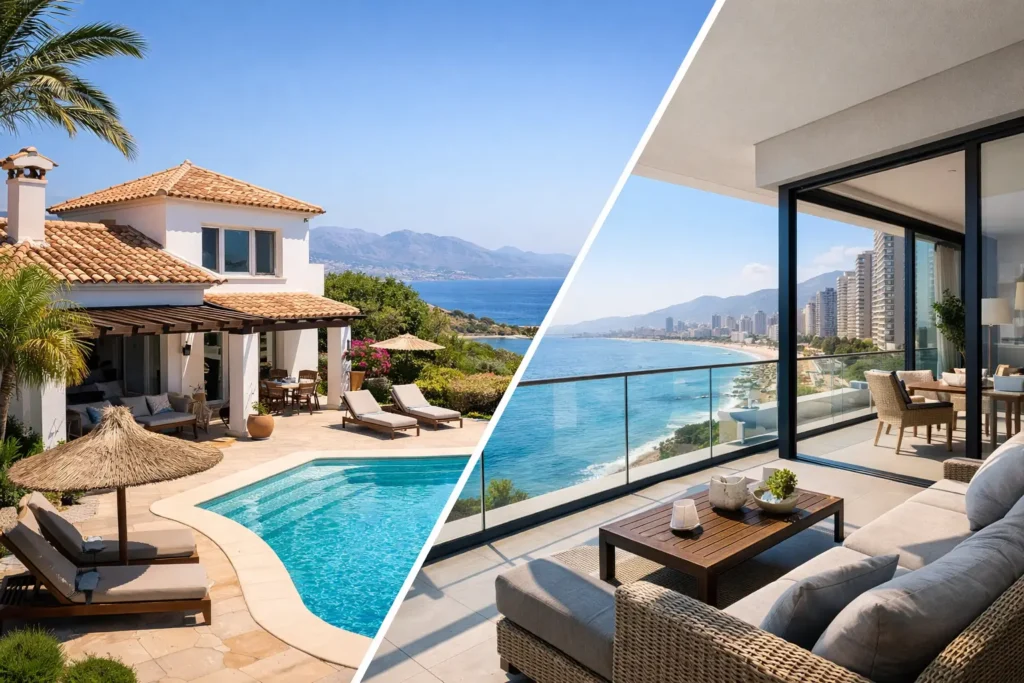
A sea view from a terrace can make almost any property feel like the right one. But when deciding between a villa or flat in Spain, the better choice is usually the one that still suits you after the keys are handed over: when the pool needs attention, friends want to visit, the property is empty for three months, or you begin spending much more time here than planned.
For buyers considering the western Costa del Sol, there is no universal winner. A flat can offer an easy, lock-up-and-leave base near the beach, marina or town. A villa can provide space, privacy and the freedom to shape your home around your life. The right decision depends on how you will use it, what ongoing responsibility feels comfortable and how much flexibility you need.
Start with the life you want to lead
Before comparing square metres or asking for a list of features, be clear about the purpose of the purchase. A couple planning frequent long weekends may value a secure development, lift access and the ability to close the door without worrying about a garden. A family intending to spend every school holiday in Spain may quickly outgrow a two-bedroom flat, however attractive its communal pool is.
For permanent relocation, think beyond the holiday feeling. Daily life brings shopping, parking, access to healthcare, walking routes, storage and whether you want to maintain outdoor space through the hotter months. Retirees often like the sociable, low-maintenance nature of a well-run block of flats, while others see a private garden and pool as an essential part of the move.
Location can alter the equation. In central Estepona, for example, a flat may put restaurants, the promenade and amenities within easy reach, reducing the need to drive. Around Manilva, La Duquesa and Casares, a villa or townhouse can offer more internal and external space for the same budget than a comparable home in a prime seafront setting. Neither is automatically better – it is a question of what you will use most often.
Villa or flat in Spain: the real cost difference
The purchase price is only the opening figure. Both property types have annual costs, including local council tax, known as IBI, insurance, utilities and, where applicable, community fees. The balance between these costs is different for villas and flats.
Flats usually come with community charges that fund shared elements such as gardens, swimming pools, lifts, lighting, security and maintenance of common areas. A good community can be a genuine advantage: work is organised collectively and the development often remains attractive for owners and holiday tenants. However, buyers should ask how much is held in reserve, whether major works are planned and whether there are restrictions on pets, holiday lets or exterior alterations.
A villa may have lower or no community fees, particularly if it is detached and not on an urbanisation with shared facilities. That does not mean it is cheaper to run. The owner is responsible for the pool, garden, gates, roof, exterior paintwork, drainage, pest control and any repairs. Larger homes also tend to have higher energy use, insurance premiums and maintenance bills.
The practical lesson is simple: do not compare a villa’s asking price with a flat’s asking price alone. Ask for realistic annual running costs, review recent utility bills where possible and allow a contingency for maintenance. A property that feels affordable on completion should also feel comfortable to own five years later.
Space, privacy and the everyday trade-off
A villa’s strongest appeal is obvious. You gain private outdoor space, room for visitors, parking and, often, a private pool. For owners who enjoy entertaining, have children or grandchildren, travel with pets or simply want peace around them, these benefits can outweigh the extra work. Villas may also offer better separation between living areas, guest accommodation and a home office.
Privacy needs checking rather than assuming. Some villas have wonderful plots but overlook neighbouring terraces, while others feel secluded despite being close to town. Visit at different times if possible. Listen for road noise, look at surrounding plots and ask whether nearby land has development potential.
Flats make a different promise: more time enjoying Spain and less time managing a property. Many have generous terraces, sea views, parking and pools without the responsibility of looking after them personally. Newer developments can be particularly appealing for buyers who want modern design, energy efficiency and a straightforward arrival experience.
The compromise is proximity to neighbours. You may hear chairs moving above, share facilities in busy summer weeks and need community approval for certain changes. Ground-floor properties can offer garden space, but privacy and security deserve careful consideration. Penthouses can deliver outstanding terraces and views, although exposure to sun, wind and weather can make maintenance more significant than expected.
Holiday use and rental potential
If rental income is part of the plan, choose the property first as an owner and second as an investor. A home that only works on a spreadsheet can become a disappointment if you do not enjoy using it yourself.
Flats often suit the holiday-rental market because they are close to beaches, cafés, golf and transport links, while communal pools and secure parking appeal to short-stay guests. They are generally easier for a management company to oversee between bookings. That said, rental rules can differ by municipality and community, and a licence or registration may be required. Some communities limit or prohibit tourist lets, so this must be checked before committing, not after completion.
Villas can command strong weekly rates when they offer sought-after features such as a private pool, sea views, several bedrooms and easy access to local amenities. They can also attract longer family stays. However, their running costs are higher, cleaning and changeovers are more involved, and the property needs reliable care when vacant. A villa in a quiet inland location may be perfect for personal use but less straightforward to market for short stays than a flat near the coast.
Rental performance depends on more than property type. Condition, seasonality, legal compliance, location, presentation and realistic pricing all matter. Treat projected income with caution and work from conservative assumptions.
Resale and long-term flexibility
A flat in a popular, well-maintained location can have broad appeal when the time comes to sell. It may suit first-time overseas buyers, retirees, investors and holiday-home owners, which can widen the buyer pool. The quality of the development is central: poor community management, high fees or tired communal areas can affect demand.
A villa has a more individual market. Its value is often closely linked to plot size, view, privacy, condition and exact setting. A well-positioned villa with legal documentation in order can remain highly desirable, particularly where detached homes are limited. Equally, highly personal design choices or a remote location can narrow the audience.
Flexibility matters here. If you are unsure whether your Spanish home will become a permanent base, a rental property or a future sale, favour practical layouts, sensible access and features that appeal beyond your own taste. The most memorable property is not always the easiest one to resell.
Questions worth answering before you view
A focused viewing brief saves time and avoids being swayed by a single attractive terrace. Decide how many weeks you expect to use the property, whether you need a lift or step-free access, how many guests you genuinely host, and whether you are happy to arrange pool and garden maintenance. Be honest about driving too. A peaceful hillside villa can be ideal for some buyers and inconvenient for those who want to walk to dinner every evening.
For flats, review the community fees, meeting minutes, rules and planned works. For villas, ask about pool and garden costs, boundary responsibilities, planning status, access, water supply and any community obligations. In both cases, check orientation, parking, storage, internet availability and the quality of the approach road.
At Omni Real Estate, we often find that buyers arrive convinced they need one type of home and leave with a clearer, more personal brief. Viewing a carefully chosen mix of flats, townhouses and villas across the right areas is often the quickest way to understand where your priorities really sit.
The best property should make your time in Spain easier, not create a list of jobs you did not expect. Whether that means a sun-filled flat near the marina or a villa with room for every generation, choose the home that fits the life you plan to live when the holiday mood has settled into everyday life.