


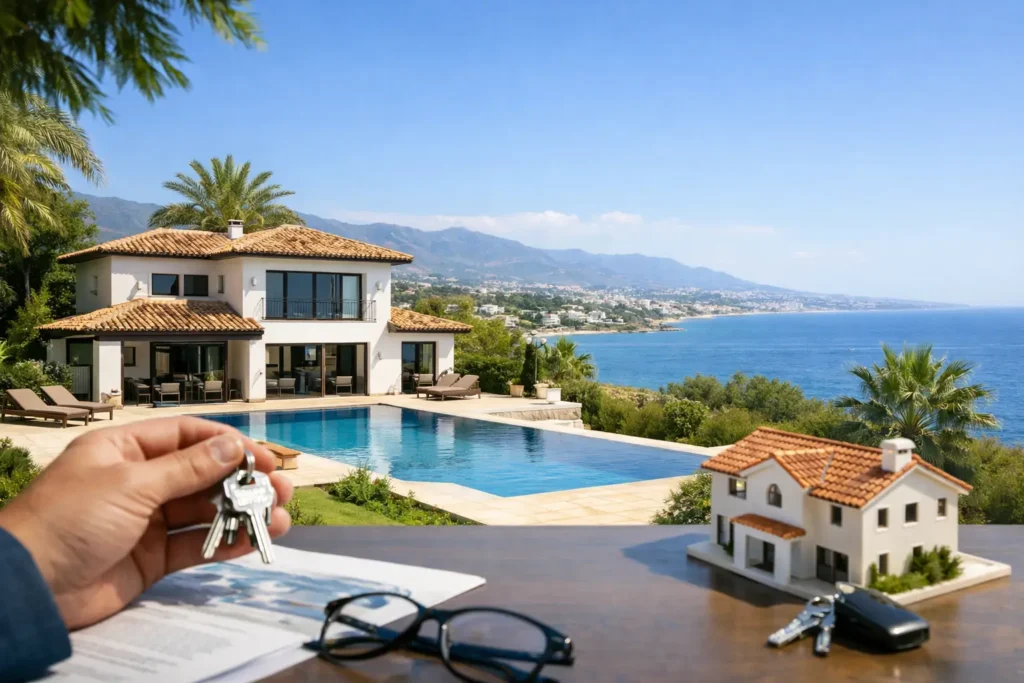
A villa purchase on the Costa del Sol can mean breakfast on a sea-view terrace, room for visiting family and a genuine base in Spain rather than another hotel booking. It can also involve choices that are easy to underestimate from the UK: hillside access, water supply, planning history, community rules and the real cost of keeping a pool. This guide to buying a Spanish villa is designed to help you ask the right questions before you fall in love with the view.
Start with how you will use the villa
The best villa for a two-week holiday each summer is not always the best choice for retirement, regular family stays or rental income. Be clear about the role the property needs to play before deciding on a location, plot size or budget.
For a lock-up-and-leave holiday home, a villa within a well-managed community can be a sensible compromise. You may still enjoy private outdoor space and a pool, while benefiting from maintained roads, security and less responsibility when you are away. A detached home on a larger plot offers more privacy and freedom, but it usually brings greater upkeep and may be further from shops, restaurants and the beach.
For permanent living, think beyond the photographs. Test the journey to supermarkets, medical services, golf, schools and Malaga or Gibraltar airports. The Costa del Sol is beautifully varied, but a ten-minute drive on a map can feel very different in August traffic or during a winter downpour. In areas such as Estepona, Casares, La Duquesa, Sabinillas and Manilva, the right setting may be coastal, golf-side, village-close or tucked into the hills. Each has a different rhythm.
Choose an area before choosing a property
Many buyers begin by searching for a certain number of bedrooms and a private pool. It is often more productive to narrow down the lifestyle first. A south-facing villa near a busy marina suits buyers who want to walk to dinner. A home near a golf course can offer calm surroundings and open views, but may be less convenient without a car. Country properties provide space and character, although access roads, utilities and paperwork need particularly careful checking.
View the area at different times where possible. Morning sun, late-afternoon shade, road noise and nearby holiday rentals can change the experience considerably. Ask whether neighbouring plots are built out, whether land nearby has development potential and how the area feels outside peak season.
A knowledgeable local agent should be able to explain not only current asking prices, but why one street or urbanisation commands more than another. This context matters when judging whether a villa is fairly priced and whether it will remain appealing if you later decide to sell or let it.
Set a budget that includes the full purchase cost
Your purchase budget should not stop at the agreed price. In Andalusia, buyers of resale homes generally pay Property Transfer Tax, currently 7 per cent of the price. New-build homes are usually subject to 10 per cent VAT, plus Stamp Duty, which is commonly 1.2 per cent in Andalusia. Rates and circumstances can change, so confirm the position with your independent lawyer before committing.
You should also allow for legal fees, notary and Land Registry costs, mortgage-related fees where relevant, and a small contingency for surveys or specialist reports. As a working guide, many buyers set aside around 10 to 13 per cent above the price for taxes and professional costs, depending on whether the villa is resale or new build and how it is financed.
Then consider ownership costs. These can include annual IBI council tax, rubbish collection, insurance, community fees if applicable, pool and garden maintenance, utilities and security. A large garden, heated pool and extensive terraces can be wonderful features, but they have a running cost. Asking the seller for recent bills gives you a more realistic picture than relying on estimates.
View with a villa-specific checklist
A viewing should be about more than the kitchen and the view. Villas have practical details that flats rarely do, and they can be expensive to correct after completion.
Check the orientation and how much sun the pool and main terrace receive across the day. Look at the condition of retaining walls, drainage, roofs, windows and outdoor tiling. On a sloping plot, ask how rainwater is managed. If there is a basement or lower ground floor, look for signs of damp and ask about ventilation.
Confirm the water arrangement. Most urban villas are connected to mains water, but some properties have wells, tanks or irrigation systems. Ask what is included in the sale, whether the pool equipment is functioning and when the air conditioning, boiler and electrical installation were last updated. Fibre internet is another worthwhile check for buyers working remotely or planning longer stays.
Do not be put off by a home that needs cosmetic work if the location, structure and legal position are right. Equally, do not let fresh paint hide a poor layout, difficult access or an oversized maintenance commitment. The villa needs to work for your ordinary Tuesday, not only for a sunny viewing day.
Appoint an independent lawyer early
Your estate agent can guide you through the search and negotiation, but an independent Spanish property lawyer is essential. Ideally, appoint one before you sign a reservation agreement or transfer funds. They should act solely for you, communicate clearly in English where needed and explain any risks in plain terms.
The lawyer will check ownership, charges and debts recorded against the property, and confirm that the villa matches the Land Registry and Cadastre records. They should review planning permissions, the certificate of occupancy or equivalent documentation, licences for extensions and pools, and any community statutes that affect use of the property.
This is especially important with older villas and rural homes. A glazed terrace, guest annexe, pool house or extended basement may look established, yet not appear correctly in the official records. Sometimes the issue can be regularised; sometimes it cannot. The point is to understand it before contracts are exchanged, rather than inherit a problem later.
If you are buying with a mortgage, the lender will arrange a valuation, but that valuation is not a substitute for legal due diligence. Depending on the villa’s age, condition and complexity, a separate building survey can also be sensible.
Understand the buying stages
Once an offer is accepted, the usual next step is a reservation agreement. This takes the villa off the market while your lawyer begins checks. Read the terms carefully, particularly the circumstances in which the reservation money is refundable.
If the legal position is satisfactory, buyers commonly sign a private purchase contract and pay a deposit, often 10 per cent of the agreed price less the reservation amount. The contract should state the completion date, what is included in the sale, and the consequences if either party fails to complete.
Completion takes place before a notary, either in person or through a properly arranged power of attorney. The remaining balance is paid, the title deed is signed and possession is handed over. Your lawyer then handles tax filings and registration. A calm, well-managed transaction depends on setting realistic timescales and not treating legal checks as a formality.
Be realistic about rental income
A villa can be a rewarding holiday-rental asset, but rental potential should be assessed honestly. Location, outdoor space, parking, air conditioning, bedroom count, condition and proximity to the coast all affect demand. So do running costs, management fees, cleaning, marketing and periods when the property is empty.
Short-term tourist letting is regulated in Andalusia and requirements can vary by property and municipality. Before buying for rental use, ask your lawyer to confirm whether the villa is eligible for a tourist rental registration and whether any community rules restrict holiday lets. Do not rely on an existing listing or a seller’s assurance alone.
For some owners, longer winter lets or personal use with occasional rentals offer the better balance. For others, a newer, easier-to-manage villa in a popular location may outperform a larger property with high overheads. The right answer depends on your income expectations and how much personal use you want to protect.
Buy with confidence, not urgency
Competition can be strong for well-priced villas, particularly those with good views, privacy and easy access to amenities. Moving promptly is useful, but urgency should never replace proper advice. A realistic offer backed by proof of funds, a clear timetable and professional representation is often more persuasive than simply offering the highest figure.
At Omni Real Estate, we see that the strongest purchases begin with an honest conversation about lifestyle, budget and non-negotiables. The right villa is not necessarily the most dramatic one you view. It is the home whose location, legal position, costs and everyday practicality still feel right once the holiday mood has worn off.
Give yourself permission to walk away if key questions cannot be answered. The Costa del Sol offers a wide choice of villas, and the right one should give you confidence long before it gives you the keys.