


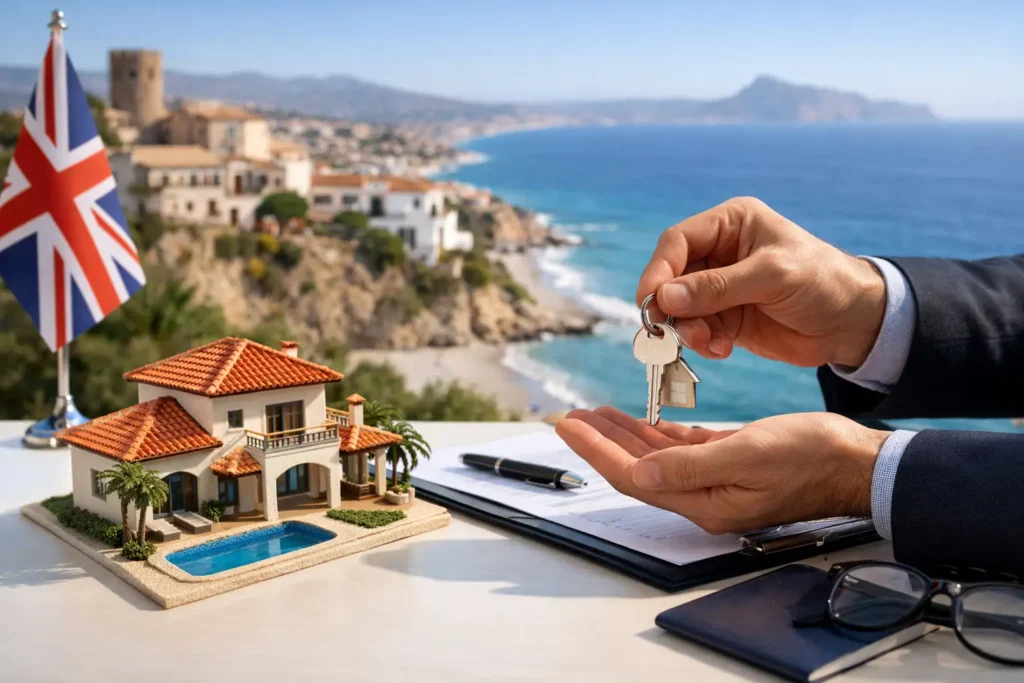
The right home in Spain can feel obvious within minutes. The hard part is knowing whether the purchase behind it is as sound as the view from the terrace. A good buying property in Spain guide should do more than explain the steps. It should help you avoid expensive assumptions, especially if you are buying from the UK and trying to make decisions at a distance.
For most buyers, the process is perfectly manageable once you understand where the pressure points are. Those pressure points are usually not the glossy parts of the search. They are the legal checks, the true buying costs, the differences between resale and new build, and the question of whether the property actually suits the life you want in Spain.
What a buying property in Spain guide should cover first
Before looking at viewings and negotiations, be clear on your purpose. Are you buying for long summer stays, full-time living, retirement, or rental income? That decision affects almost everything else, from location and property type to running costs and mortgage options.
A couple planning regular holidays may prioritise lock-up-and-leave convenience, walkability and low maintenance. A buyer relocating permanently may care more about year-round community, storage, medical access and practical features that do not always show up in listing photos. An investor may accept a smaller terrace or busier road if the rental demand and price point make sense. None of these approaches is wrong, but mixing them often leads to a compromise that never feels quite right.
This is where local guidance matters. Two properties can be priced similarly yet perform very differently depending on micro-location, community fees, orientation, build quality and future resale appeal. On the Costa del Sol, for example, one development may feel lively and convenient for holiday lets, while another a few minutes away is better suited to quieter full-time living.
Set your real budget, not just your purchase price
One of the biggest mistakes buyers make is focusing only on the agreed property price. In Spain, you also need to budget for purchase costs, and they are not minor extras.
As a rule of thumb, many buyers should allow roughly 10 to 14 per cent on top of the purchase price, depending on the region, property type and whether they are buying resale or new build. This can include transfer tax or VAT, notary fees, land registry fees, legal fees and mortgage-related costs if finance is involved. The exact figure varies, so treat online estimates as a starting point rather than a promise.
You should also think beyond completion. Community fees, IBI council tax, rubbish charges, utilities, insurance and non-resident tax can all affect affordability. If the property will be vacant for parts of the year, you may also want key holding or property management.
A home that looks comfortably within budget can become less attractive once annual running costs are added in. Equally, a slightly more expensive property in a better location may hold value better and be easier to rent or resell.
Area matters more than many first-time buyers expect
Buyers often start with a broad dream of “southern Spain” and then realise that daily life varies a lot from one area to another. Travel times, beach access, road noise, seasonality, amenities and the feel of the community all make a real difference.
If you are buying on the western Costa del Sol, places such as Estepona, Casares, Manilva, Sabinillas and La Duquesa can each suit different priorities. Some buyers want a marina atmosphere and easy restaurant access. Others want golf, space, sea views or a more traditional Spanish feel. It is worth being honest about what your day-to-day life will actually look like rather than buying the version of Spain you imagine for one perfect week in August.
This is also why viewing trips should be focused. Seeing twenty unsuitable properties in a day rarely helps. A better approach is to narrow down by lifestyle, budget and must-haves, then compare a smaller number of homes that genuinely fit your brief.
The legal side of buying property in Spain
A solicitor who acts for you independently is essential. That is not a formality. It is one of the most important protections in the entire purchase.
Your solicitor should carry out due diligence on the property, check ownership, debts and charges, confirm that the home is correctly registered, and verify planning and licence issues where relevant. If you are buying a resale property, they should also check whether there are outstanding community fees or local taxes attached to it.
If you are buying a new build or off-plan property, the checks are different but just as important. You need to understand the developer’s track record, the payment schedule, guarantees for stage payments, building licences and the expected completion terms. Off-plan can offer strong value and modern specifications, but timelines can move, and you need to be comfortable with that.
You will also need an NIE number, which is the foreigner identification number used for financial and legal matters in Spain. It is required for the purchase process. Most buyers also open a Spanish bank account to handle payments and ongoing direct debits.
Resale, new build or off-plan?
There is no universal best option. It depends on what matters most to you.
Resale property often gives you a clearer sense of the exact location, view, surrounding buildings and established community. In some cases, it can also offer more generous room sizes or more character than newer developments. The trade-off is that you may need refurbishment, updated air conditioning, or modernisation of kitchens and bathrooms.
New build property appeals to buyers who want energy efficiency, contemporary design and lower short-term maintenance. It can be ideal if you want a fresh finish and a straightforward move-in experience. The downside is that some developments take time to mature, and the immediate surroundings may not yet feel settled.
Off-plan can be attractive for buyers who are happy to wait and want access to the best early-release units or payment staged over time. But patience and careful legal review are part of the bargain.
Mortgages and currency planning
If you are financing the purchase, speak to a mortgage specialist early. Spanish banks do lend to non-residents, but terms, loan-to-value ratios and documentation requirements vary. Leaving this too late can slow the process or narrow your options.
Currency planning matters just as much. If your funds are in pounds and the property is priced in euros, exchange rate movement can materially change your budget. On a larger purchase, even a small shift in the rate can mean thousands of pounds either way. Many buyers sensibly discuss currency strategy before they are ready to complete.
The reservation stage and what happens next
Once you find the right property, it is common to sign a reservation agreement and pay a reservation deposit. This takes the property off the market while legal checks begin. The exact amount and terms can vary, so this is another stage where professional advice matters.
If everything is satisfactory, the next step is usually the private purchase contract, with a further payment made at that point. Completion then takes place before a notary, when the balance is paid and the title deed is signed.
This can sound formal, but with the right support it is usually very straightforward. The key is making sure each stage is understood rather than rushed.
Common mistakes UK buyers can avoid
Most problems do not happen because buyers are careless. They happen because buyers assume the process works exactly as it does in the UK.
Spanish property purchases follow different rules, timelines and expectations. Verbal assurances are not enough. Community rules need checking. Rental assumptions should be tested. A lovely property on first viewing might feel very different in winter, or at school run time, or when the bar below opens for the evening.
It is also easy to overestimate what you will use. If you say you want to walk everywhere, choose somewhere genuinely walkable. If you say you will work remotely, check internet reliability and practical space. If you want rental income, be realistic about occupancy, seasonality and management.
A good agent should help narrow your search, challenge weak assumptions and point out both strengths and drawbacks. That kind of honesty saves time and usually leads to better decisions.
Buying in Spain with more confidence
The best buying property in Spain guide is not really about forms and fees alone. It is about matching the right property to the right purpose, then making sure the purchase is properly checked from start to finish. That is where confidence comes from.
For many overseas buyers, especially those purchasing on the Costa del Sol for the first time, personal support makes all the difference. A family-run agency such as Omni Real Estate can help translate the market into clear choices, whether you are searching for a holiday flat, a permanent home or a property with investment potential.
Spain can be a brilliant place to buy, but the smartest purchases are rarely the fastest ones. Give yourself enough time to ask direct questions, understand the numbers and choose with your head as well as your heart. The sunshine is still there once the paperwork is done.