


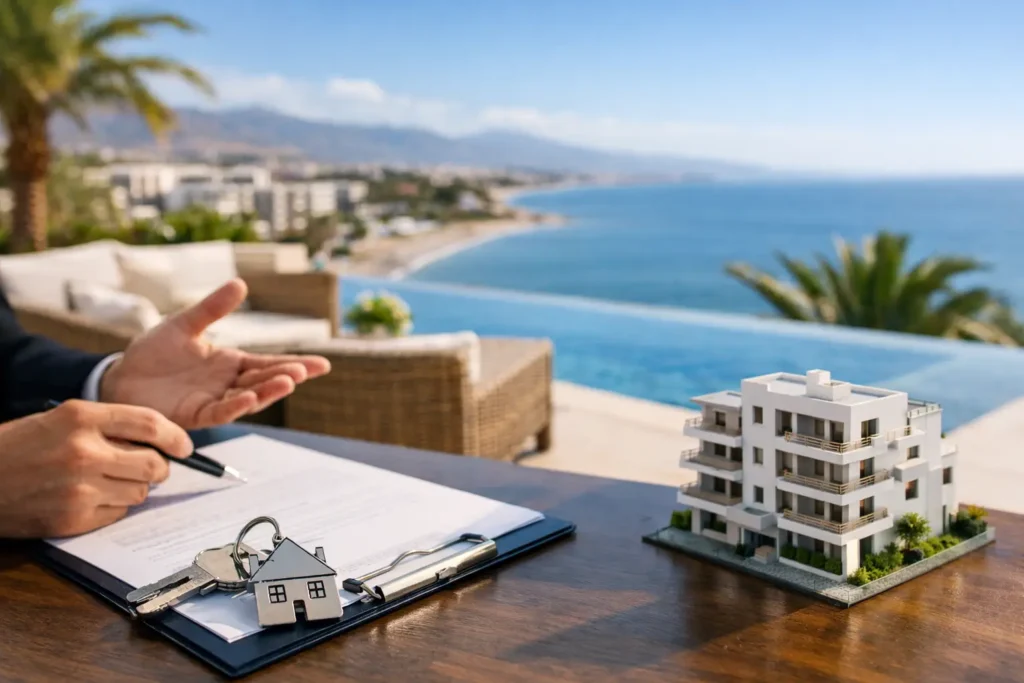
A well-presented flat in the right Costa del Sol location can attract serious interest quickly. The difference between a smooth sale and months of disappointing viewings is rarely luck. It comes down to accurate pricing, complete paperwork and a clear plan from the outset. This guide to selling a flat on the Costa del Sol explains what owners should prepare before their property reaches the market.
Start with a price that reflects today’s market
The most common mistake sellers make is pricing according to what they paid, what a neighbour has advertised for, or what they hope to achieve. None of those figures necessarily reflects what a buyer will pay now.
A realistic valuation should consider recent completed sales, not just active listings, alongside the condition of the property, its orientation, outdoor space, views, parking, community facilities and running costs. A two-bedroom flat in La Duquesa with a large south-facing terrace and underground parking may appeal to a very different buyer than a similar-sized home without those features. The same applies across Estepona, Casares, Sabinillas and Manilva, where small differences in position can have a meaningful effect on value.
It also helps to be honest about competition. If several comparable homes are for sale in the same complex, buyers will notice the differences immediately. A higher asking price can be justified by a superior renovation, open views or a better floor plan, but it needs to be supported by the property itself.
Pricing too high can be costly. The strongest level of interest usually comes in the first weeks of marketing, when a new instruction is most visible to active buyers. If a property sits unsold for too long, buyers may assume there is a problem or wait for a reduction. A considered launch price gives you a better chance of attracting credible offers while maintaining room for sensible negotiation.
Prepare the documents before marketing begins
Spanish property transactions can move quickly once a buyer is found. Having the paperwork ready avoids unnecessary delays and gives buyers greater confidence that the sale is being handled properly.
For the sale of a flat, the documents commonly required include:
- the title deed, known as the escritura, and the latest Land Registry details;
- an energy performance certificate;
- recent IBI council tax receipts and proof of rubbish collection payments where applicable;
- a community certificate confirming that fees are paid and identifying any agreed or pending special levies;
- the first occupation licence or equivalent occupancy documentation where relevant;
- current utility bills, floor plans and details of any furniture or fixtures included in the sale.
If the property has been used for holiday rentals, be clear about its registration status, rental history and any community rules that affect tourist lets. Buyers looking for income will ask detailed questions, while lifestyle buyers may value the fact that a building has tighter controls. It depends on the audience you want to attract.
Non-resident sellers should also take early advice on the tax position. At completion, buyers generally retain 3% of the purchase price and pay it to the Spanish tax authority as an advance against the seller’s potential capital gains tax liability. There may also be municipal plusvalía tax to address. The final amount due depends on your individual circumstances, ownership history and allowable costs, so this is a matter for a qualified Spanish tax adviser or solicitor rather than an estimate made during a viewing.
Make the flat easy to imagine living in
Buyers do not need a show home, but they do need to see the property’s potential without distraction. On the Costa del Sol, the lifestyle spaces often sell the home first. A clean terrace, an inviting dining area and an unobstructed route to the view can be more persuasive than an expensive but cluttered interior.
Before photography and viewings, deal with practical faults such as dripping taps, broken blinds, tired sealant, loose handles and damaged light fittings. Fresh neutral paint can be worthwhile if walls are marked or colours are highly personal. Remove excess furniture where rooms feel tight, and store away personal photographs, paperwork and bulky possessions.
Pay particular attention to outdoor areas. Wash terrace floors, clean glass balustrades, arrange seating and make sure awnings, shutters and outdoor lighting work. If the flat includes a storeroom, garage space or communal facilities, ensure these are photographed and explained clearly. They may be decisive for a buyer planning longer stays or permanent relocation.
Professional photography matters because many purchasers will first view the property from the UK or elsewhere in Europe. Good images should show the actual scale, light and surroundings of the home. Over-edited photographs may generate clicks, but they can create disappointment at a viewing. Accurate presentation attracts buyers who are more likely to proceed.
Market the property to the right buyers
A strong marketing strategy is more than placing a listing on a portal. It starts by identifying the likely purchaser. Is the flat best suited to a couple seeking a lock-up-and-leave holiday base, a retiree who needs lift access and nearby amenities, or an investor focused on rental demand? The answer shapes the photographs, description, pricing conversation and distribution.
For example, a beachside flat close to restaurants and the promenade should highlight walkability and year-round convenience. A golf flat might place greater emphasis on views, peaceful surroundings, parking and the quality of the development. If a property is ideal for remote working, reliable internet, a separate office area and proximity to services can be just as valuable as the number of bedrooms.
Descriptions should be specific rather than full of vague promises. Buyers want to know the terrace orientation, community fees, distance to useful amenities, whether the home is sold furnished, and any features that affect everyday ownership. A clear, truthful listing saves time for everyone.
This is where a local, responsive agent earns their place. Omni Real Estate takes a personal approach to matching properties with active buyers and presenting each home with the local context international purchasers need. For a seller, prompt feedback after viewings is particularly valuable. It reveals whether the market is questioning the price, presentation, layout or simply whether the property is being shown to the wrong audience.
Handle viewings and offers with purpose
A viewing should feel relaxed, but it should not be unprepared. Keep the flat cool or warm as needed, open shutters to show the natural light and arrange viewings at a time that best demonstrates the terrace, sea view or communal areas. If there are known maintenance issues or planned community works, disclose them early. Surprises discovered later can damage trust and derail negotiations.
When an offer arrives, the highest number is not always the best offer. Consider the buyer’s funding, whether they need a mortgage, their proposed completion date, any conditions attached and the size of the reservation or deposit they are prepared to commit. A cash buyer with complete documentation and a realistic timetable may offer greater certainty than a higher bid dependent on a chain or finance approval.
It is sensible to agree the essentials in writing before taking the property off the market: price, included furniture, reservation amount, deadlines, finance conditions and what happens if either party withdraws. Your solicitor should review the terms before you sign a reservation agreement or private contract. Spanish contracts are binding, and a rushed agreement can create avoidable difficulty later.
Keep control through to completion
Once terms are agreed, the process moves to legal checks, contract preparation and arranging the notary appointment. Your solicitor will normally coordinate with the buyer’s representative, obtain current certificates and ensure any mortgage or charges registered against the flat are dealt with correctly.
Keep paying community fees, utilities and local taxes as normal until completion, unless your legal representative advises otherwise. Arrange final meter readings, gather keys, remotes and access cards, and leave clear instructions for appliances if furniture is included. A well-organised handover is a small detail that leaves a good final impression and prevents post-completion calls.
Selling a Costa del Sol flat is not simply a matter of finding a buyer. It is about giving the right buyer confidence in the home, the price and the process. Start early, keep the information clear, and choose support that is close enough to the market to advise you honestly when a decision matters.