


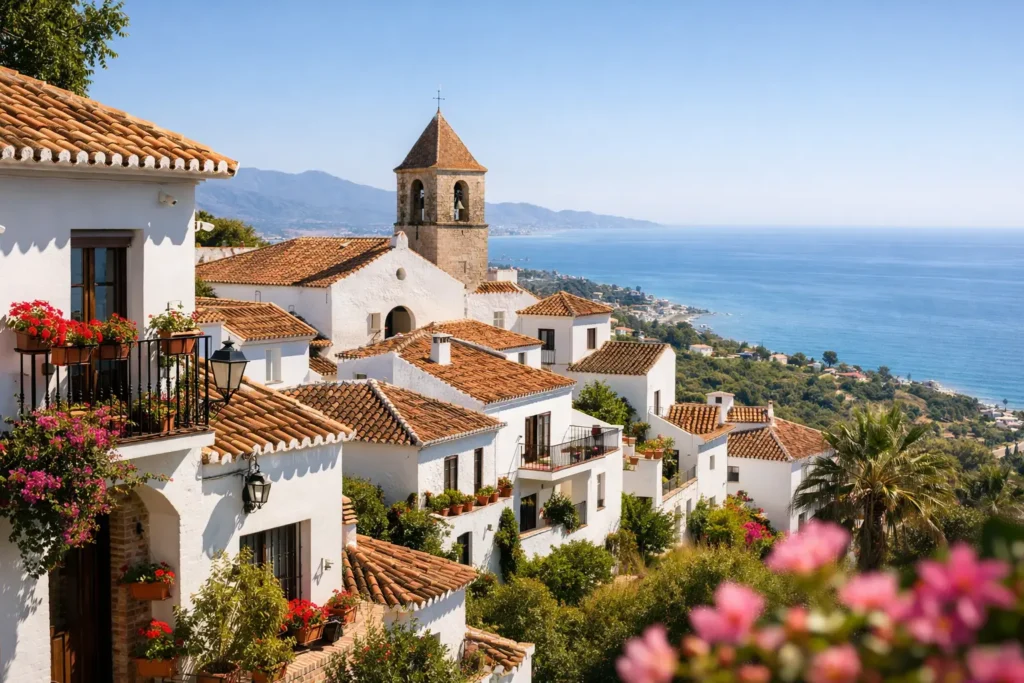
A whitewashed façade, terracotta roof tiles and a shaded courtyard can feel a world away from a modern resort flat. When people ask us about “traditional Spanish homes Costa del Sol”, they are usually looking for more than a property style. They want a home with a sense of place – somewhere that feels genuinely Andalusian, while still working for holidays, retirement, family life or a rental plan.
That is a worthwhile ambition, but character properties require a more considered search. The right home can offer privacy, space and lasting appeal. The wrong one can bring unexpected renovation costs, access issues or legal questions that are much easier to address before an offer is made.
What makes a home traditionally Spanish?
There is no single definition. Along the western Costa del Sol, a traditional home might be an old village townhouse with thick stone walls, a country finca surrounded by olive or fruit trees, a cortijo-style house with internal patios, or an older villa designed around covered terraces and garden living.
Many share recognisable features: whitewashed walls, shutters, wrought-iron details, exposed beams, tiled floors and rooms that stay naturally cooler in the summer. Outdoor space is often central to the layout. Rather than one large open-plan area, you may find a sequence of terraces, courtyards, porches and smaller rooms that have evolved over time.
This is part of the charm, but it also explains why no two homes are alike. A character property should never be assessed purely from photographs. Its condition, orientation, access, boundaries and practical layout matter just as much as its appearance.
Where traditional Spanish homes in Costa del Sol stand out
The more established coastal towns and inland fringes offer a particularly interesting mix of traditional property. In Manilva and Casares, buyers can find white village homes with dramatic views, alongside country properties that feel peaceful yet remain within reach of the coast. Sabinillas and La Duquesa tend to suit those who want everyday amenities, the marina and beach nearby, although truly traditional homes are less common in the most central coastal locations.
Estepona has an appealing contrast. Its old town offers restored townhouses close to independent shops, cafés and the promenade, while the surrounding countryside and western edge can provide larger plots and more rustic homes. The best location depends on how you plan to use the property.
A village townhouse may be ideal for a couple who want to walk to dinner and do not need a large garden. A finca can be a better fit for buyers who value land, privacy and room for visiting family, but it will generally demand more maintenance and a willingness to drive. There is no universal ‘best’ choice – only the right balance for your life in Spain.
The appeal is real, but so are the trade-offs
Traditional homes often have a warmth that newer developments cannot reproduce. Mature gardens, established neighbourhoods and individual architecture can also make them feel more distinctive in the resale market. For buyers who intend to spend long periods in Spain, that sense of permanence can be a major advantage.
However, an older home may not provide the easy, lock-up-and-leave experience of a new-build flat. Original windows, roofs, plumbing, electrics and drainage may require upgrading. Thick walls can be beneficial in summer, but some houses feel cool or damp in winter if insulation, ventilation and heating have not been improved.
Stairs, uneven floors and narrow doorways are also common. They may add character, yet they are worth considering carefully if you are planning ahead for retirement or travelling with young grandchildren. Parking can be limited in historic centres, while rural homes may have steep or unmade access roads. These are not necessarily deal-breakers, but they should be known and accepted before you fall in love with the view.
Look beyond the decorative details
A well-presented home can still conceal costly work. During viewings, it helps to look past the styling and ask practical questions about the property’s history and upkeep.
Start with the roof. Ask when it was last repaired or replaced, whether there have been water ingress issues and if rainwater drains away effectively. In a traditional property, small cracks are not always a concern, but signs of movement, damp patches or fresh paint covering a localised area deserve further investigation.
Then consider utilities and comfort. Is the electrical installation modern? Is there reliable mains water, or does the property rely on a well or storage deposit? What type of heating and hot water system is installed? Does the home have air conditioning, double glazing or insulation where it matters most? A beautiful fireplace is pleasant, but it may not be enough for winter evenings in a house with high ceilings and stone floors.
Outside, clarify exactly what is included in the sale. Boundary lines, rights of way, water supply, septic tanks, pools and outbuildings all need to be understood. If there is land, find out how much of it is usable and how it is maintained. A large plot can be a pleasure, but it can also mean irrigation, pruning, fencing and regular gardening costs.
Legal checks matter even more with older homes
Every Spanish property purchase needs proper independent legal advice, but traditional homes can involve additional points to review. Older buildings may have been extended over the years, converted from agricultural use, or altered by previous owners without the documentation now expected.
Your appointed lawyer should check that the property description, built size and plot details align with the Land Registry and Cadastre records. They should also confirm planning status, licences where relevant, any outstanding debts or charges, and whether the home has the required documentation for occupation and utilities.
For country properties, access and water rights deserve particular attention. A home may appear private and self-contained, but access could cross neighbouring land or depend on a shared track. Likewise, an attractive pool, guest annexe or storage building should be checked rather than assumed to be fully compliant.
This process is not about finding reasons not to buy. It is about understanding the property you are buying, identifying any risks early and agreeing a price and timetable with clear information in hand.
Budget for ownership, not only the purchase price
A character home can be good value when compared with a newer property of a similar size, especially away from the immediate beachfront. Yet the purchase price is only one part of the decision.
Allow for purchase taxes and professional fees, then think honestly about the first two years of ownership. You may choose to repaint, update bathrooms, improve insulation, install heating or renovate outdoor areas before the home feels fully yours. If the property will be used occasionally, factor in keyholding, cleaning, garden care, pool maintenance and insurance.
Rental income may help with running costs, but it should not be assumed. A rustic finca and a village townhouse appeal to different holiday guests, and licensing requirements, local demand, access and year-round maintenance all affect viability. Buyers looking for investment returns should assess the figures conservatively and prioritise a home they would still be happy to own if rental performance changes.
How to find the right balance of character and convenience
The strongest purchases usually combine authentic features with sensible modern improvements. A renovated townhouse with original tiles but updated plumbing, or a cortijo with traditional proportions and efficient heating, can offer the best of both worlds.
It is useful to make a short list of non-negotiables before viewing: walkability, sea views, single-level living, a private pool, space for guests, rental potential or a manageable garden. Then separate these from preferences such as exposed beams or a particular style of doorway. This keeps the search focused when a charming property tries to win you over despite missing something essential.
At Omni Real Estate, we encourage buyers to view character homes with both their heart and their practical judgement. Local knowledge helps here: the atmosphere of a village in August can be very different from a quiet January weekday, and a ten-minute drive on a map may feel quite different on a winding country road.
A traditional Spanish home should add pleasure to your life, not create uncertainty after completion. Take time to understand how it lives in every season, appoint the right legal and technical professionals, and choose a property whose character is matched by sound fundamentals. That is how a house with history becomes a home you can enjoy with confidence.